

Known for its expansive skyline, bustling streets, and the legendary mantra “if you can make it there, you can make it anywhere,” New York is truly the city that never sleeps. This world-famous melting pot is rich in culture, cuisine, and has a unique character all its own. One moment, you’re enjoying a meal at a celebrity chef’s restaurant; the next, you’re hopping on the subway to Times Square to catch a Broadway show. With countless daily happenings, you’ll always find something to keep your calendar jam-packed.
While living amidst the bright lights and fast pace of this iconic metropolis can seem out of reach, finding an affordable apartment in New York’s Big Apple is more achievable than you think. To help you enjoy the best rental experience in New York without breaking the bank, we’ve compiled a list of the five cheapest neighborhoods in NYC.
The five most affordable neighborhoods in New York in 2026 are:
Bushwick
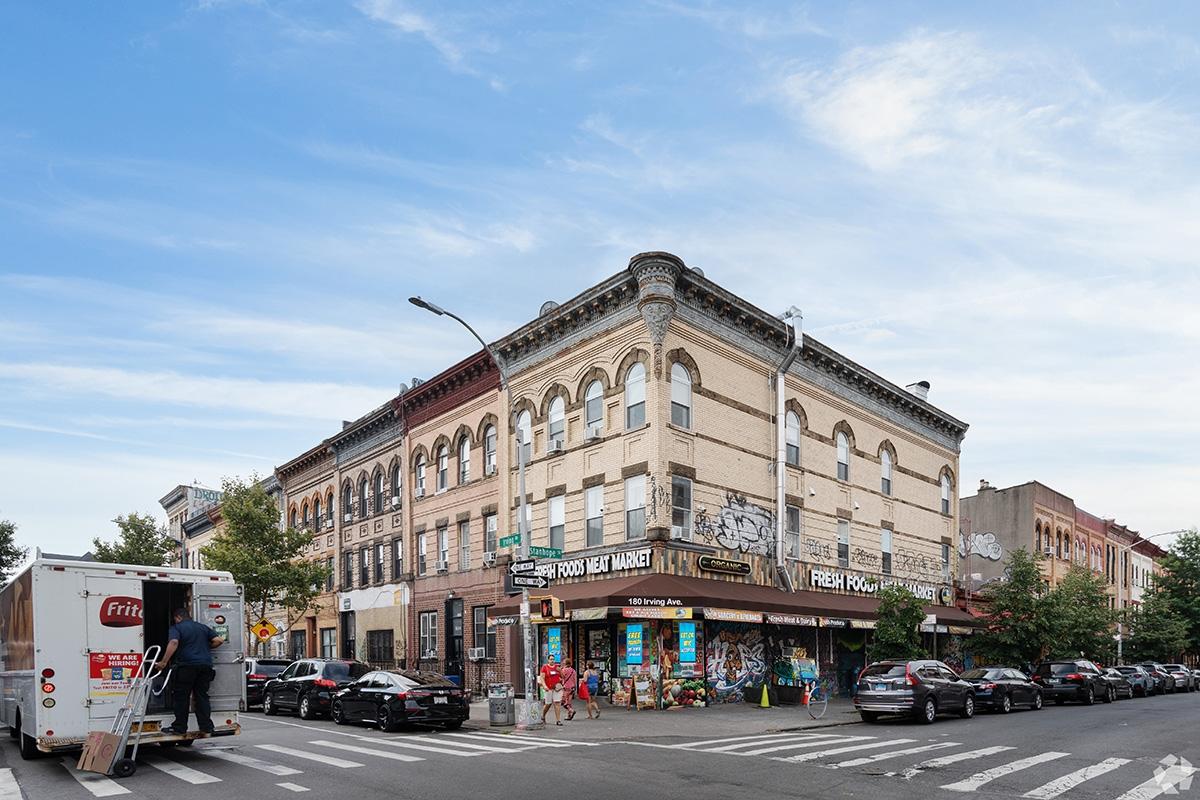
- Average 1-bedroom rent in New York: $4,081/month
- Average 1-bedroom rent in Bushwick: $1,692/month
- Median home value in Bushwick: $839,500
Bushwick gives renters room to breathe without cutting them off from the city. Near the Brooklyn-Queens border, the neighborhood pairs residential blocks of loft spaces and walk-up apartments with tree-lined stretches of independent businesses. The neighborhood’s central location to Williamsburg, Bed-Stuy, and the greenery of Highland Park makes it appealing to renters who want to be close to everything for an affordable price.
Things to do in Bushwick
Art spills out of galleries and onto walls and storefronts in Bushwick and the community supports this creative focus. Murals from the Bushwick Collective color the walls, turning ordinary blocks into an outdoor gallery. Maria Hernandez Park acts as a central gathering space with basketball courts, dog runs, and open lawns that get packed on weekends. Wyckoff Avenue and Broadway are always busy with people frequenting casual dining spots, coffee shops, and late-night eateries. Galleries, music venues, and local markets round out the neighborhood by reinforcing the creative community.
Transportation in Bushwick
Public transportation is one of Bushwick’s strongest points as three subway lines (L, M, and J) run through the neighborhood. The J and Z share much of the same route, and during weekday rush hours they provide skip-stop service. For local travel, MTA buses will drop you off within steps of your destination. Though public transit and walking are Bushwick residents’ preferred way to get around, drivers can still access the rest of the city via nearby roads, like Bushwick Avenue and the Jackie Robinson Parkway.
Southeast Queens
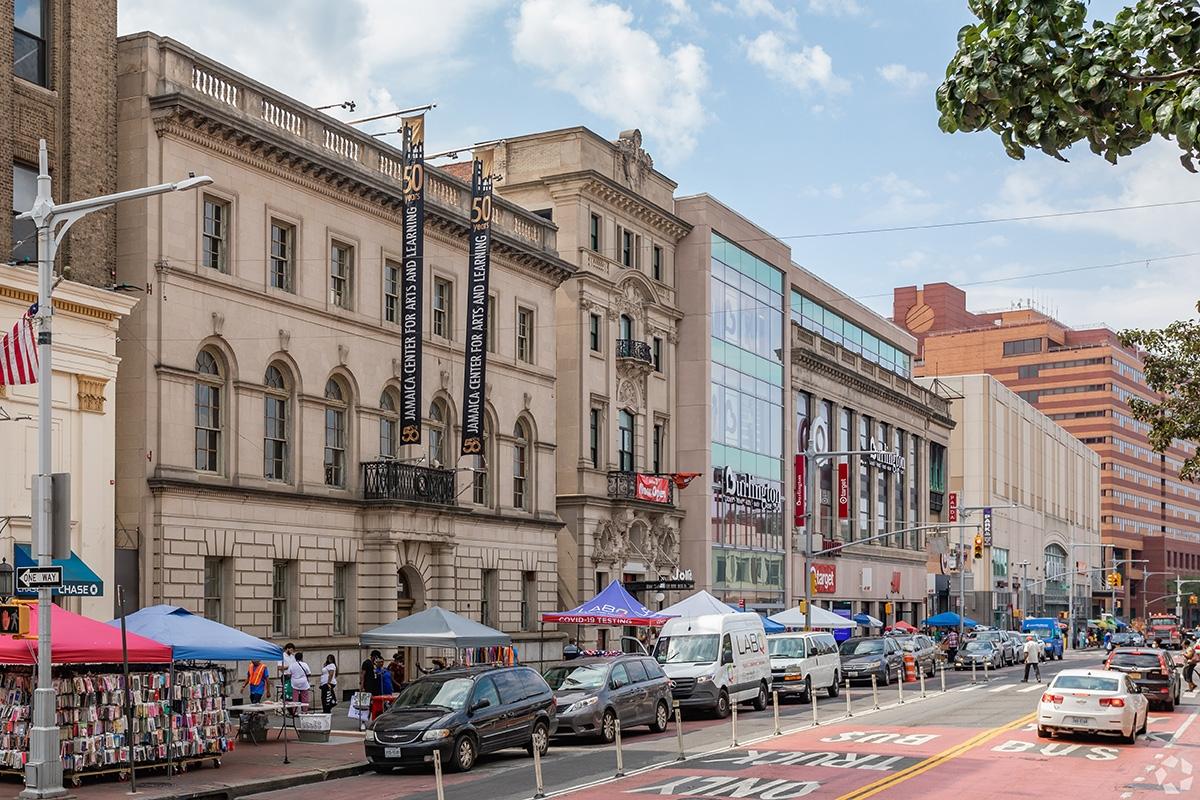
- Average 1-bedroom rent in New York: $4,081/month
- Average 1-bedroom rent in Southeast Queens: $1,700/month
- Median home value in Southeast Queens: $307,500-$782,500
Southeast Queens shows off a quieter side of the city with tree-lined streets, historic buildings, and neighborhood parks. Made up of communities including Jamaica, Queens Village, and Ozone Park, the area is largely residential, with single-family homes, small apartment buildings, and a few taller mid- to high-rises. For renters looking beyond the city’s tighter, higher-priced neighborhoods, Southeast Queens stands out for its relative affordability and convenient access to regional transit.
Things to do in Southeast Queens
Daily life in Southeast Queens revolves around practicality and convenience, rather than nightlife and entertainment, but there is still plenty to do. Jamaica Avenue serves as the main retail cluster, lined with shops, grocery stores, and a wide range of dining options that reflect the borough’s diversity. Parks, such as Roy Wilkins Park, add open green space, athletic facilities, and year-round programming, while local cultural venues and recreation centers host events that bring communities together.
Transportation in Southeast Queens
Even though Southeast Queens is farther from the city core, strong transit connections make sure that renters never feel disconnected. With both subway lines (E, J, and Z) as well as the Long Island Rail Road at Jamaica Station, residents have no problem navigating the city. Numerous bus routes make travel between the area’s different communities simple, while the Van Wyck Expressway, Belt Parkway, and close proximity to John F. Kennedy International Airport add convenience for drivers and frequent flyers alike.
South Bronx
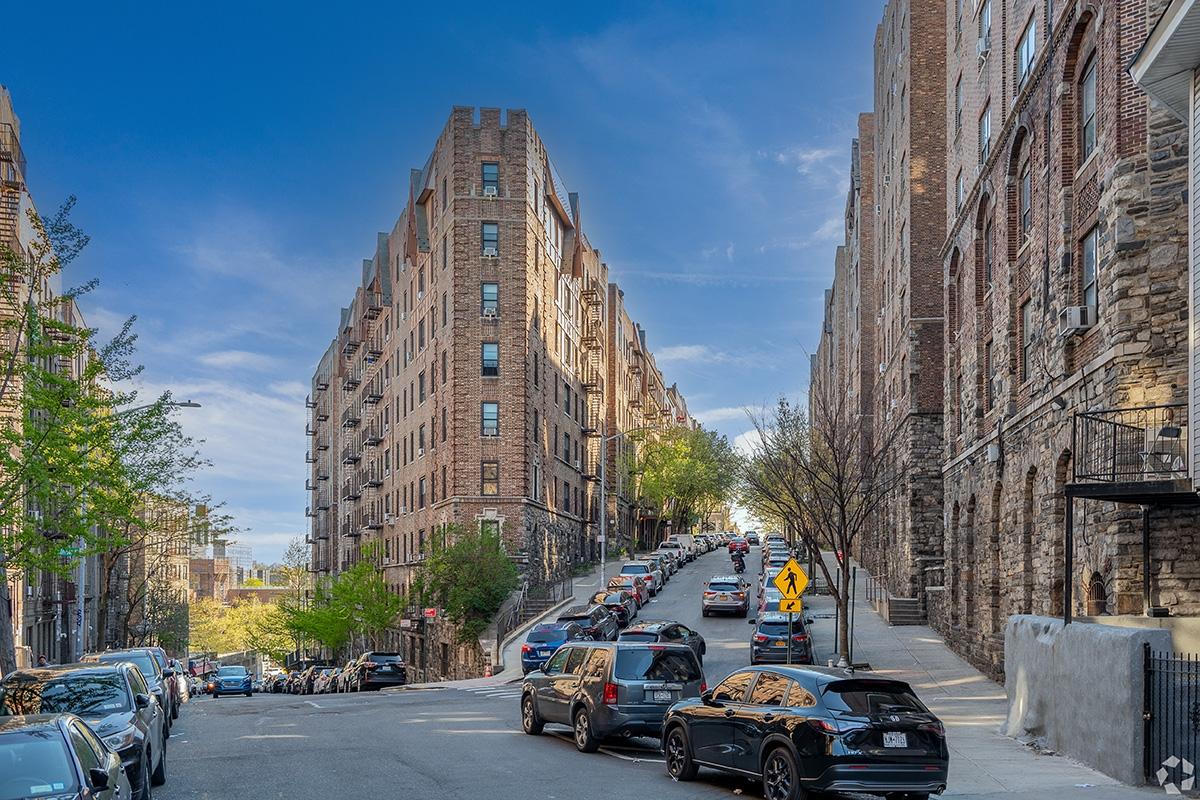
- Average 1-bedroom rent in New York: $4,081/month
- Average 1-bedroom rent in South Bronx: $1,876/month
- Median home value in South Bronx: $147,500-$712,500
Set along the Harlem River, South Bronx offers a short commute to Manhattan while providing lower rent prices than many neighborhoods across the river. Encompassing a variety of smaller neighborhoods, like Mott Haven and Port Morris, the area features a range of rental options, from modern high-rises to historic walk-ups. Compared to Manhattan’s faster-paced rhythm, South Bronx slows down so residents can enjoy strolls through the numerous parks and waterfront views.
Things to do in South Bronx
The endless outdoor areas and green spaces in South Bronx give residents room to walk and spend time outside. Crotona Park, the largest park in the South Bronx, serves as one of the area’s main gathering places, with lawns, sports fields, and an amphitheatre that are always filled with residents. Streets in Mott Haven and nearby communities are lined with restaurants, cafes, and casual food spots that shape the local dining scene. Institutions, such as the Bronx Documentary Center and the Bronx Museum of the Arts, contribute to the area’s cultural spirit. Yankee Stadium is one South Bronx’s most recognizable destinations, bringing game-day energy and year-round event traffic.
Transportation in South Bronx
Whether you want to explore other parts of the Bronx or head into Manhattan, multiple subway lines in South Bronx, including the 2, 4, 5, 6, B, and D trains, can take you there. Bus routes run frequently through the area, connecting the vast neighborhood. If you’re willing to brave the traffic, highways and bridges, such as the Major Deegan Expressway and Bruckner Boulevard, provide direct routes to other parts of New York.
Central Harlem
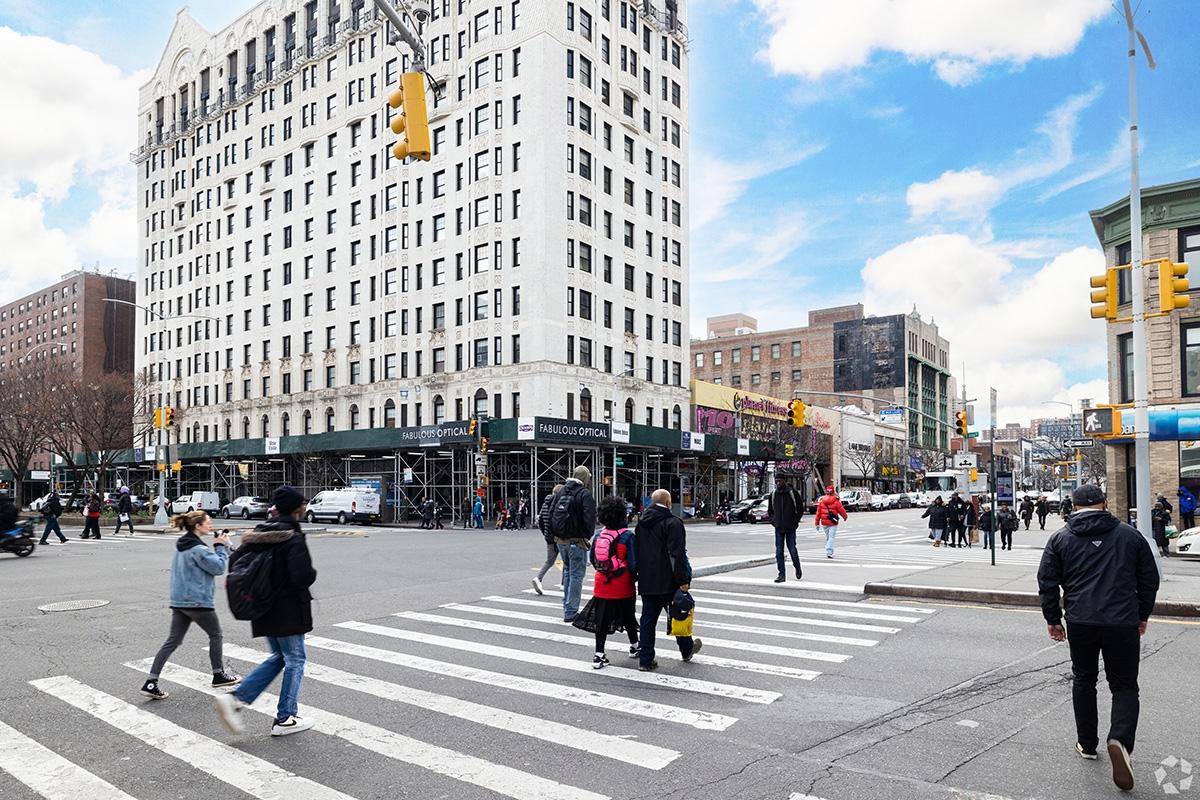
- Average 1-bedroom rent in New York: $4,081/month
- Average 1-bedroom rent in Central Harlem: $2,369/month
- Median home value in Central Harlem: $786,250
Central Harlem is a rare Manhattan neighborhood where historic significance, cultural vitality, and affordability converge. With roots tracing back to its Dutch origins, Central Harlem has evolved into the creative and cultural epicenter of New York City. The neighborhood's iconic brownstones and pre-war apartment buildings, many meticulously restored, stand alongside thoughtful new developments that respect the area's architectural heritage.
Things to do in Central Harlem
The Apollo Theater remains Central Harlem’s most iconic stage, drawing crowds for comedy, jazz, and live performances, while smaller music venues and community spaces showcase emerging artists and neighborhood talent. The dining scene is just as layered, from longstanding soul food institutions to newer restaurants and international spots that reflect the neighborhood’s range and evolution. Green space takes different forms across the neighborhood: St. Nicholas Park brings trails and open lawns near City College, and Marcus Garvey Park fills the days with summer concerts and pool time. Along Frederick Douglass Boulevard and 125th Street, cafes, shops, and local businesses keep Central Harlem’s commercial corridors active, blending long-standing neighborhood character with a fresh sense of momentum.
Transportation in Central Harlem
Central Harlem is one of Manhattan’s best-connected neighborhoods, with the A, B, C, D, 2, 3, 4, 5, and 6 trains all serving the area and making trips downtown, uptown, and into the outer boroughs relatively easy. The 125th Street station acts as a key transit anchor, and Metro-North adds direct regional access to Westchester and Connecticut. Bus routes make crosstown and local travel practical, while Harlem River Drive and FDR Drive give drivers a direct path along Manhattan’s east side.
Bedford-Stuyvesant (Bed-Stuy)
- Average 1-bedroom rent in New York: $4,081/month
- Average 1-bedroom rent in Bed-Stuy: $2,642/month
- Median home value in Bed-Stuy: $995,000
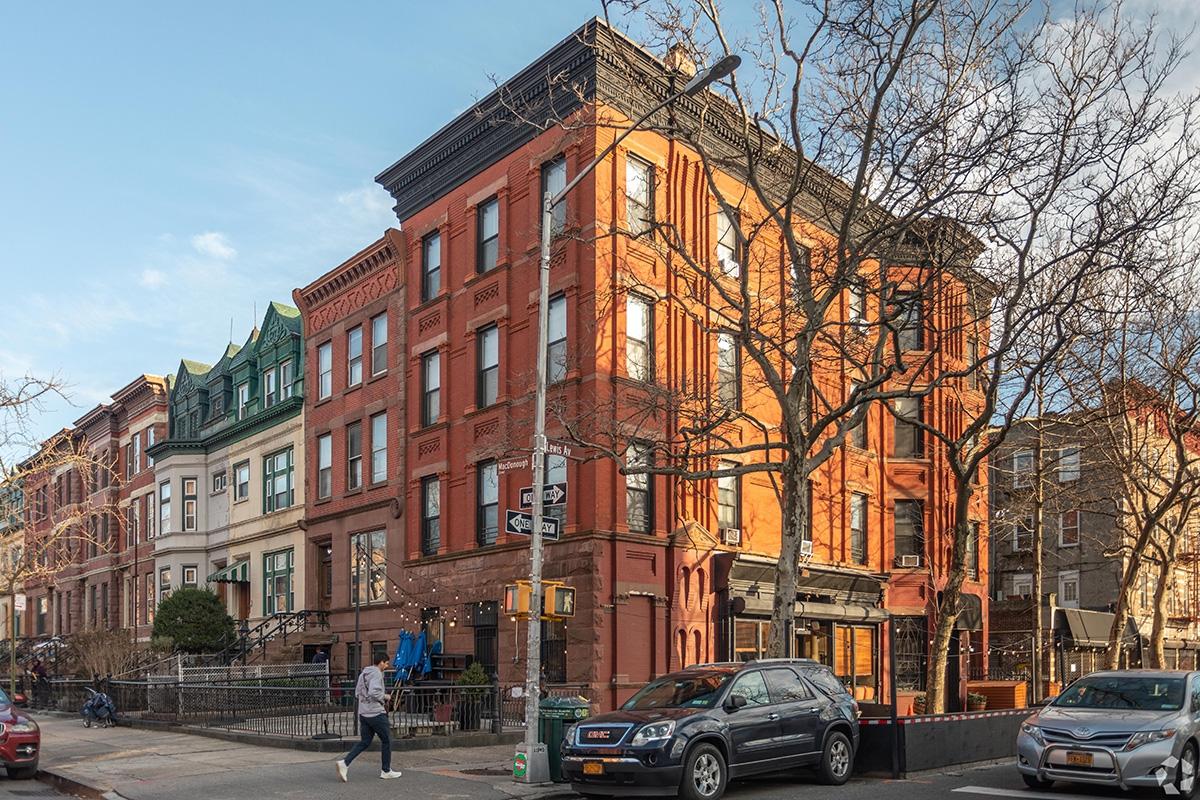
Bedford-Stuyvesant, often called Bed-Stuy, is a Brooklyn neighborhood known for its historic brownstones and active residential streets. It offers a range of rental options, from classic row houses to modern apartment buildings. Its central Brooklyn location allows residents to access other parts of the borough while maintaining relatively more affordable rents than nearby areas like Downtown Brooklyn.
Things to do in Bedford-Stuyvesant
Bed-Stuy’s appeal is in the small and cozy rather than the big and bright that New York is known for. Corner cafes, neighborhood bakeries, and independent restaurants sitting on Bedford Avenue, Tompkins Avenue, Lewis Avenue, and Fulton Streets are a part of residents’ routines, whether for chores or a night out. Herbert Von King Park sits at the heart of the neighborhood and functions as more than green space — it’s a long-standing community gathering place with a cultural arts center, events, and an amphitheater.
Transportation in Bed-Stuy
Bed-Stuy is lined by A and C trains to the south with J and Z servicing its northern edge. Some parts of the area connect to the G line for even more transit options. All of this combined gives residents solid access to Manhattan, Downtown Brooklyn, Bushwick, and beyond. Bus routes fill out the rest of the neighborhood, alongside Broadway and Atlantic Avenue for drivers.
Make the Most of Your Move with Apartments.com
Finding the right apartment in New York City comes down to balancing budget, location, and daily needs. Whether you’re drawn to Brooklyn’s creative energy, Manhattan’s historic neighborhoods, or Queens’ residential streets, there are options that make city living more attainable. Apartments.com provides the tools you need to compare listings, explore neighborhoods, and secure a place that fits your lifestyle.
This article was originally published on August 22, 2025.
Apartment rent data provided by CoStar Group's March 2026 reports.
FAQs
What is a comfortable salary to live in New York City?
According to Apartments.com’s Cost of Living data, a salary of $171,000 is required to live comfortably in New York.
What part of New York is cheapest to live in?
The cheapest parts of New York City to live in are usually in the Bronx and parts of Queens, since these boroughs often offer lower rents than Manhattan and many areas of Brooklyn.
Where are good places to live just outside of NYC?
A good place to live just outside of NYC depends on your budget, commute, and lifestyle, but many renters explore nearby suburbs and commuter-friendly towns in New Jersey, Long Island, and the Hudson Valley. Areas like Jersey City, Hoboken, Stamford, White Plains, and cities along transit lines, like Metro-North or NJ Transit, are often popular because they offer more space and affordability with direct connections to New York.


