

Key Takeaways
- Rent is rising unevenly. Chicago’s one-bedroom average is up 4.5% year-over-year, but downtown and North Side neighborhoods like Lincoln Park (+6.7%) are climbing far faster than the citywide figure suggests.
- Value still exists close to the lake. Edgewater, Rogers Park, and Uptown Chicago offer meaningfully lower rents with lakefront access and public transit, making them worth a look.
- New supply is popping up in the suburbs. Areas like Aurora, Crystal Lake, and Bensenville are adding units fast, which means short-term concessions for renters willing to commute a bit farther.
- Affordability is top-of-mind. The City of Chicago is looking for ways to ease the rent burden by modernizing renter protections and investing in affordable, adaptive reuse housing developments.
For years, Chicago was the city renters pointed to when they wanted big-city energy without a coastal price tag. Between the walkable streets, excellent food scene, extensive public transportation system, and constant urban energy, Chicago made a name for itself as a Midwestern NYC.
That reputation is starting to wobble. Citywide rent growth has outpaced the national average since 2022, with the average rent for a one-bedroom apartment now 24% higher than the national average.
But “Chicago rent is rising” is not the same story in every neighborhood. Some pockets of the city are heating up fast, but others have barely moved and still offer real value for renters willing to trade a little buzz for a lot more breathing room in the budget. Here’s a neighborhood-level look at where prices are climbing, where renters can still catch a break, what new supply is on the way, and how the city now compares with the suburbs.
Chicago Rental Market at a Glance
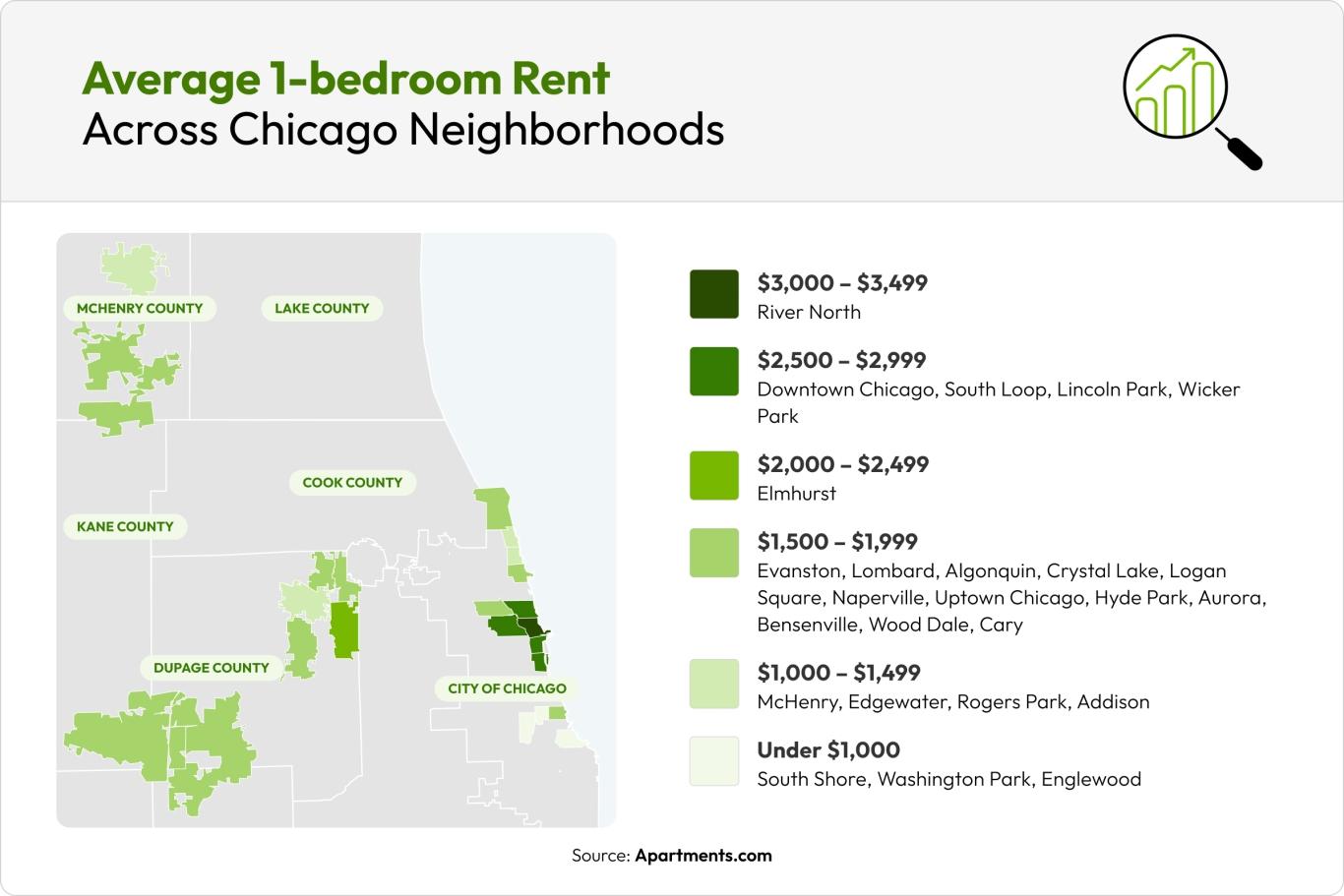
The average rent in Chicago is $2,057 per month for a one-bedroom apartment, a 4.5% increase over last year. This is 23.5% higher than the national average one-bedroom rent of $1,666 per month.
Like most other big cities, renters find the highest prices in Downtown Chicago—a one-bedroom apartment averages $2,920 per month. Downtown Chicago provides residents with the best mix of public transit access, walkability, and proximity to employment hubs and points of interest, fueling high prices and consistently strong demand.
Downtown Chicago is also the focal point of the city’s development, with over 4,000 new units under construction as of October 2026. Still, supply is struggling to catch up to demand. The citywide vacancy rate is up to 5.1%, 2.7 percentage points lower than the national vacancy rate.
How Chicago stacks up against other major metro areas
Chicago is still meaningfully cheaper than the coasts. Average rent in Chicago trails well behind New York, Los Angeles, Boston, and San Francisco, and Chicago renters can generally get more space for their money.
However, the gap between Chicago and the coasts is narrowing as renter activity in Chicagoland begins to follow the same coastal pattern: Rents continue to rise downtown, and renters begin chasing lower prices in the suburbs. However, the spread of demand only creates an uneven pattern across the Chicago metro area with patches of rapidly rising prices.
Where Rents Are Rising Fastest
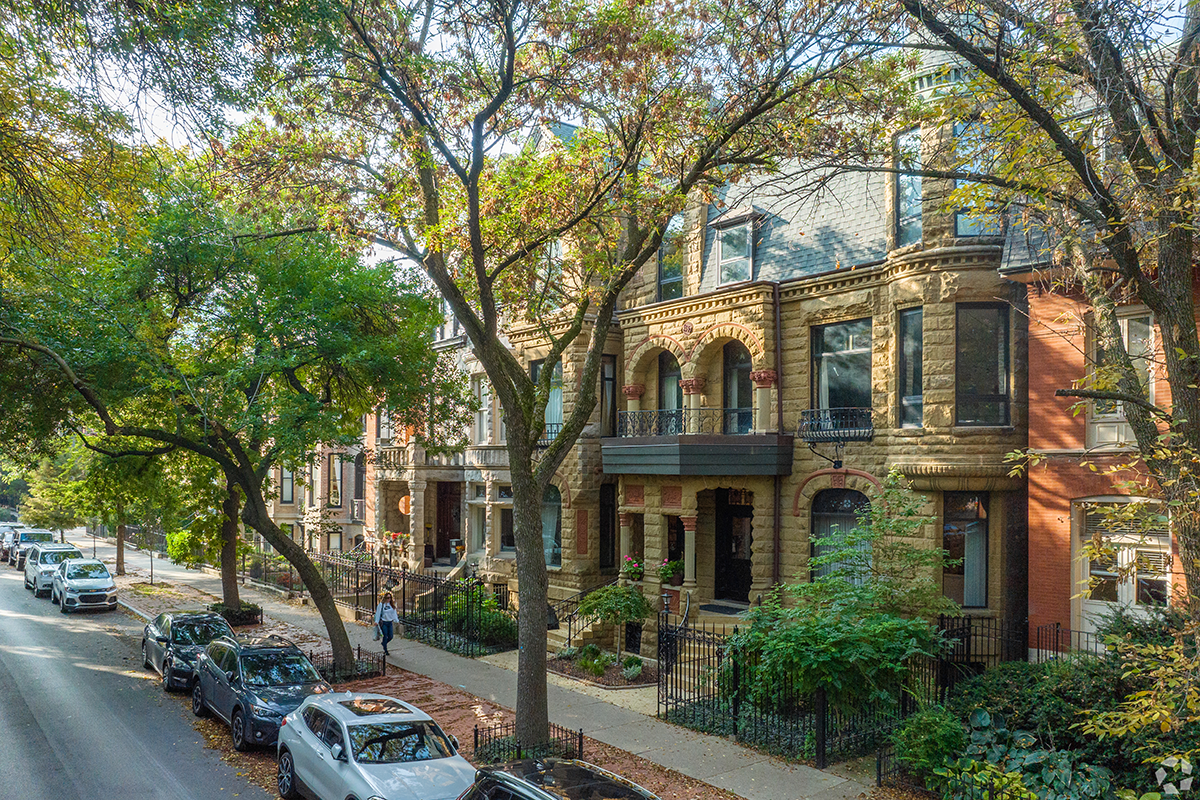
Some of the fastest-rising areas are exactly where you’d guess: downtown-adjacent, transit-rich, restaurant-dense. Others are farther out and rising for reasons that have more to do with limited supply than lakefront views.
Downtown and North Side pockets lead the climb
Lincoln Park has posted one of the steepest year-over-year increases in the city, with average rent climbing 6.7% to land at $2,564 per month for a one-bedroom. River North and South Loop aren’t far behind, with average rents up 4.9% and 4.4%, respectively.
These neighborhoods benefit from the same forces: walkability, transit access, and renewed demand from workers coming back downtown, combined with a limited supply of new units.
South and West Side neighborhoods post surprising jumps
The bigger surprise is happening farther from downtown. In neighborhoods like South Shore, Logan Square, and Wicker Park, rents have jumped by 3.2%, 4.3%, and 4.1% year-over-year, respectively.
These areas are drawing renters priced out of the North Side and downtown who still want proximity to transit and a shorter commute, and the resulting demand has moved rents faster than the available supply can absorb. If you’re watching for the next neighborhood to heat up, the South and West Sides are worth tracking as closely as downtown.
Where Renters Can Still Find Value
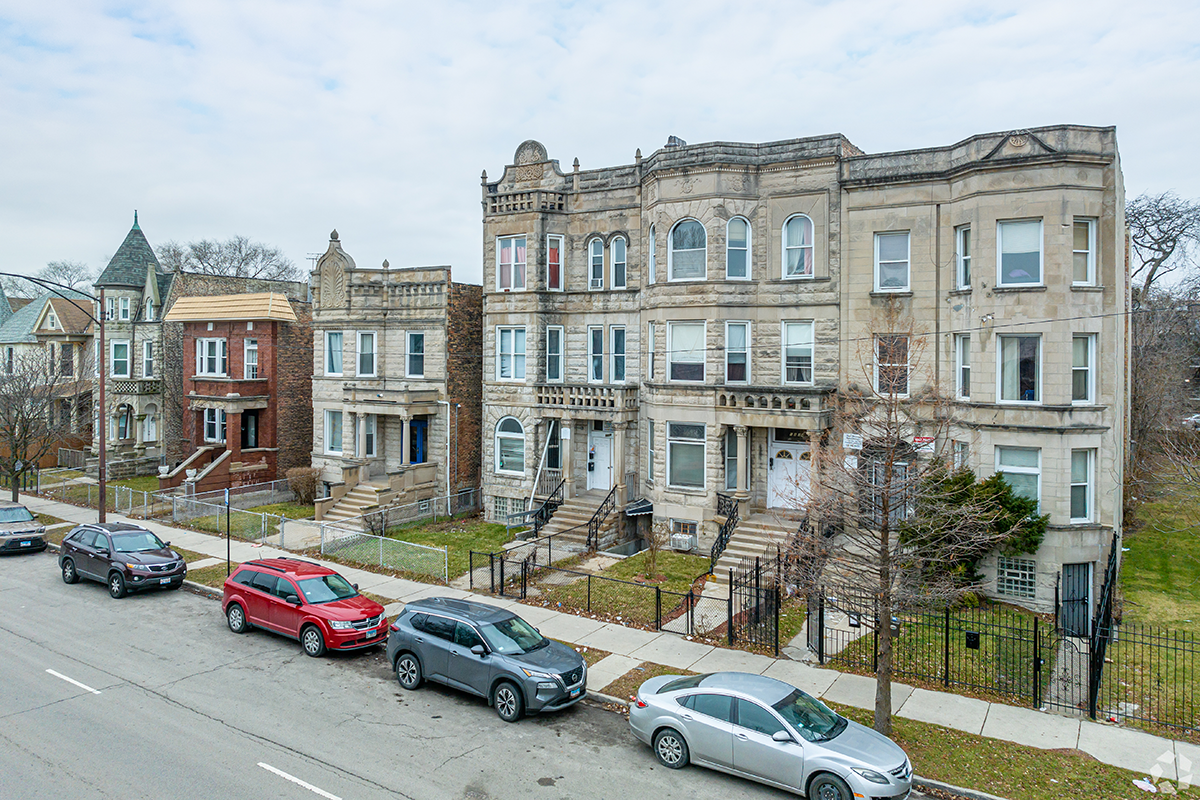
Rising rents citywide don’t mean every neighborhood is out of reach. A handful of areas, some closer to the lake than you might expect, are still priced well below the citywide average.
North Side neighborhoods where rents remain low
Edgewater, Rogers Park, and Uptown Chicago all sit along Lake Michigan in the northern end of the city and have average rents significantly below the city average. All three offer transit access into Downtown Chicago, which makes them a reasonable trade: less nightlife density and fewer points of interest, but a meaningfully lower price for renters willing to make that swap.
South Side value picks worth a second look
Englewood and South Shore are frequently cited as the most affordable neighborhoods in the city, and Washington Park and Hyde Park both post average rents well below the city average. These neighborhoods won’t offer the amenity density of the North Side, but for renters prioritizing space and price over walkable retail, they represent some of the widest margins between what you’d pay there and what you’d pay in a comparably sized unit downtown.
Where New Apartments Are Popping Up
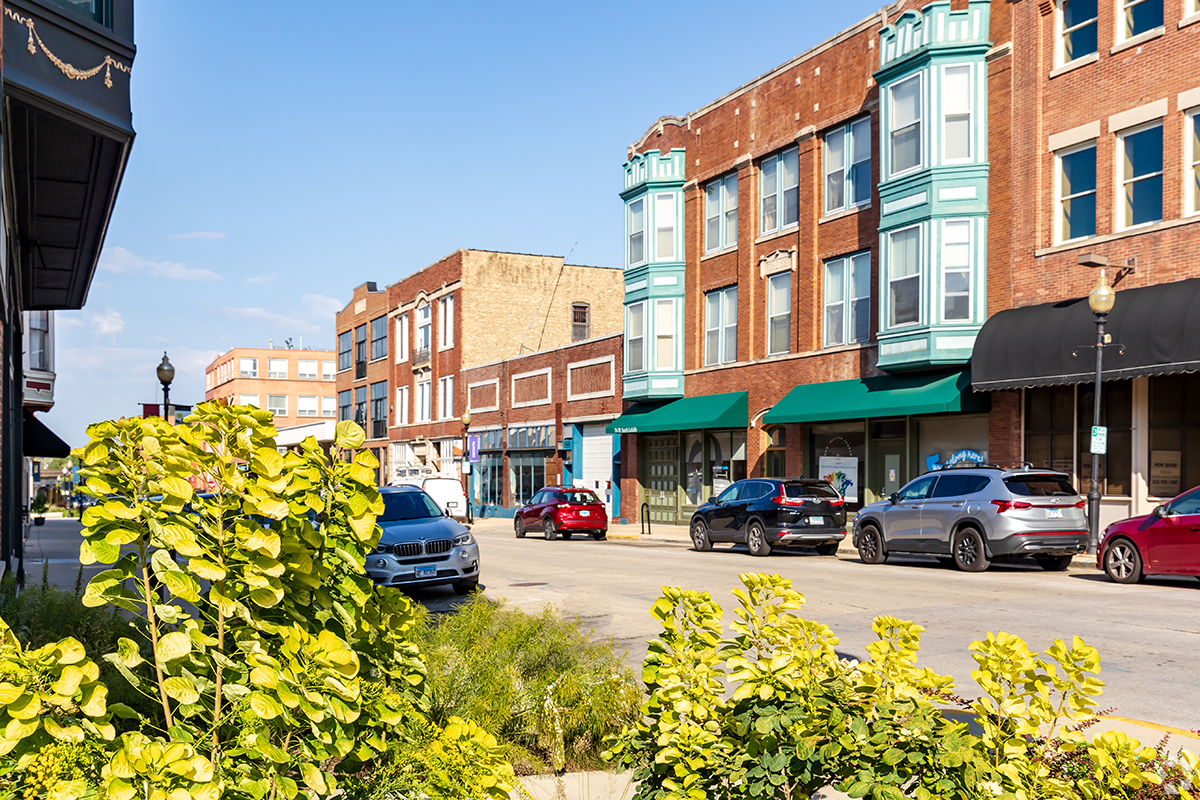
While Downtown Chicago is the focal point of multifamily development in the city, the suburbs are seeing a resurgence. Outside of Downtown Chicago, the pipeline is concentrated in a handful of areas.
Aurora
Aurora, a Chicago suburb neighboring Naperville, is positioned to see a major jump in inventory. In 2025, construction started on hundreds of new units that will increase the area’s inventory by 13.5%, many of which are luxury units that will enter the market at a higher rate. The area’s vacancy rate has fluctuated as new apartments enter the market, but quick lease-up activity signals consistent demand, so renters here likely won’t experience the benefits of oversupply like significant rent drops and more concession offers.
Only about 0.6% of the apartment inventory here are luxury units, skewing Aurora’s average rent lower than other parts of the city where luxury units are more prevalent. The suburb’s average rent will rise with the addition of new luxury units, but renters will still be able to find better deals here than in neighborhoods closer to the city center.
Eastern McHenry County
Eastern McHenry County encompasses the suburbs of Algonquin, Crystal Lake, Cary, and McHenry.
Hundreds of new luxury units popped up in 2021 and 2024, bringing the share of luxury apartments in this region to nearly 40%. New units are leasing up quickly, and the current vacancy rate of 2.6% is 3.6 percentage points lower than last year.
But new supply isn’t easing rent spikes. Rent increases ramped up in 2021 and have maintained momentum through 2026, likely due to a combination of consistent demand and the new luxury units entering the market above the average rates.
Hundreds more units are currently under construction, positioned to increase apartment supply by over 10%.
Northeastern DuPage County
Northeastern DuPage County encompasses the suburbs of Elmhurst, Lombard, Addison, Bensenville, Wood Dale, all right by Chicago O’Hare International Airport.
Construction on new apartments here has ramped up, and hundreds of new units have already hit the market this year. Like Aurora and the Eastern McHenry County regions, new apartments have been snatched up quickly, keeping the vacancy rate relatively low and maintaining a gradual rent climb. Still, renters can find lower prices here, and new apartment communities often offer deep rent concessions.
Where Demand is Moving
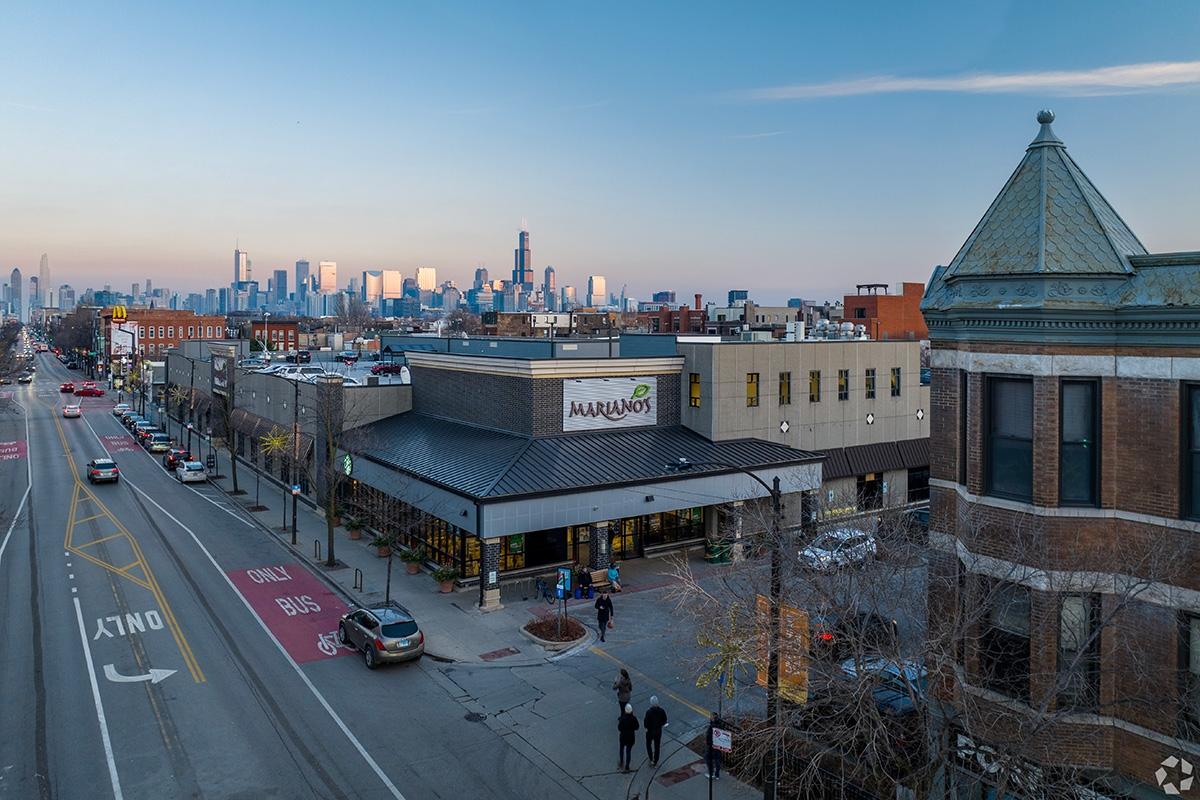
While demand is still high in the heart of Downtown Chicago, renters are also looking to Downtown-adjacent neighborhoods to get the most bang for their buck. According to Adrian Brizuela, CoStar Group’s associate director of market analytics in Chicago, Goose Island and West Town are seeing particularly high demand due to new luxury apartment communities.
“Everybody loves the shiny new toy, which in this case includes new multifamily properties that are highly amenitized with all the new bells and whistles,” says Brizuela.
Both neighborhoods offer renters proximity to Chicago Loop and River North while posting rents below the city average. The boom in luxury living in these areas allows renters to experience comfortable living in the heart of Chicago at a lower price point, so it’s no wonder that renters are drawn to these neighborhoods.
City vs. suburbs: How the math has changed
The old rule of thumb was simple: move to the suburbs for more space at a lower price. That math is getting more complicated.
Evanston, one of Chicago’s most in-demand suburbs, now averages $1,934 per month for a one-bedroom apartment, only about 6% lower than Chicago’s average one-bedroom rent. Evanston has also posted a 3.2% year-over-year increase, driven in part by steady demand tied to Northwestern University.
Remote and hybrid work have also chipped away at the old logic. As downtown living becomes viable again for workers who left during the pandemic, some renters are choosing to stay in the city rather than commute in from farther out, which keeps demand—and prices—elevated in the suburbs closest to the city center.
A Push for Affordability
As rents around the city climb higher, City Council looks for relief for renters.
Mayor’s rental reform proposal advances
In June, Chicago mayor Brandon Johnson proposed the Protecting Renters Ordinance (PRO), a law that would set restrictions on deposits and fees, extend eviction protections, and require annual registration of rental units. PRO received pushback, and several City Council members introduced the Fair and Accountable Illinois Rental Ordinance (FAIR) as a less-extensive alternative to PRO.
On Sept. 16, the Committee on Housing and Real Estate voted to advance a scaled-back version of PRO. The following day, the Committee on Zoning, Landmarks and Building Standards voted to advance FAIR.
City Council deferred floor votes on the two ordinances on Wednesday, Sept. 23, then again on Tuesday, Sept. 29 in hopes of encouraging a compromise between PRO’s and FAIR’s sponsors. The next City Council meeting is scheduled for Wednesday, Oct. 14.
Revitalization efforts in Downtown
In September 2022, then-Mayor Lori Lightfoot launched the LaSalle Street Reimagined initiative to turn vacant commercial space into affordable housing and mixed-use developments. The City approved six office-to-residential housing developments for more than $315 million in Tax Increment Financing, requiring at least 30% of units to be affordable for residents earning an average 60% of the area median income.
Brizuela says revitalization efforts will increase Downtown’s inventory by an approximate 1,700 units.
“While the LaSalle Street Reimagined initiative is not ‘new,’ there is a chance we see an even greater uptick in units under construction in Downtown Chicago as the buildings selected for financial incentives are still in the process of finalizing their capital stack,” says Brizuela.
New apartment availability in the LaSalle Street corridor could potentially ease some of Downtown’s undersupply while offering reprieve for low-income renters. But the construction process is slow, especially when it comes to taxpayer-funded developments, so it may be years before renters see that relief.
“Many of the projects are still moving through various stages of the development process, including securing financing and completing entitlements, which should lead to deliveries being spread out over multiple years rather than arriving all at once,” says Brizuela.
Where This Leaves Renters
Because of the influx in construction on luxury apartments outside the urban center, renewal shock may begin to hit renters farther out in the metro area more than in years prior. Renters may still find better deals in the suburbs than in neighborhoods closer to downtown, but keep in mind that the tide could shift as more apartments pop up.
The broad “Chicago rent is up” headline doesn’t accurately reflect what’s going on in different pockets across the city, and Chicago’s rental market rewards renters who are willing to search neighborhood by neighborhood instead of trusting a single citywide number. Be prepared to expand your search across a few neighborhoods and move fast when you find the perfect place.
Methodology
Average one-bedroom rents and year-over-year rent increases are sourced from Apartments.com Rent Trends pages. Data on delivered units and inventory growth, lease-ups, and vacancy rates are sourced from CoStar Group’s October multifamily market reports.


