

Decluttering your apartment is the first step to a refreshed space that’s ready for spring cleaning. But after months of collecting all sorts of items, even just getting started can feel overwhelming. With the right strategy and state of mind, you can declutter your apartment in no time. To help you get started, and actually finish, here are some of the best decluttering methods and tips.
Key Takeaways
- Decluttering works best when you choose a method that fits your mindset, whether it’s structured (like the Four-Box Method) or motivational (like the KonMari Method™ or Minimalism Game), making it easier to follow through.
- Breaking tasks into smaller, manageable actions, like with the Ski Slope or Packing Party methods, reduces stress and helps you make consistent progress.
- Simple rules like the 20/20 rule, 90-90 rule, and one-in, one-out habit make it easier to both declutter efficiently and maintain a clutter-free apartment long-term.
How to Declutter: Methods That Actually Work
There are tons of decluttering methods out there. Some people need a method that gives them structure, while others need a shift in their mindset. What matters most is that the method works for you, and that you’ll see the decluttering through.
Four-Box Declutter Method: trash, donate, keep, store

The four-box declutter method is a tried-and-true process where you categorize items into boxes labeled trash, donate, keep, and store. By providing clear categories for items, it narrows your decisions and makes each one easier. Each box is pretty self-explanatory:
- Keep box: items that you cannot part with because you genuinely want them or use them frequently.
- Donate box: any items that you want to get rid of that are still in useable condition and could find a home with someone else.
- Trash box: items that you will toss, including broken or unsalvageable objects.
- Storage box: items that you may not frequently use, but still want to keep. These can be anything from seasonal items or sentimental keepsakes.
KonMari Method™: find items that spark joy
Created by Marie Kondo, the KonMari Method™ revolutionized decluttering by focusing on items that “spark joy.” Instead of decluttering room by room, you work by category: clothes, books, papers, komono (miscellaneous items), and sentimental items.
By starting with items that are less taxing to decide on, you work your way up to the most difficult category: sentimental items. To help you decide what to do with an item, ask yourself if it sparks joy. Items that don’t evoke that feeling should be removed.
Ski Slope Method: zig-zag across the room
The Ski Slope Method breaks down rooms into manageable pieces and gives you a clear path to follow to help you avoid decision paralysis. Much like skiing, you start on one side of the room and zig-zag across it. You take care of each section as you go, instead of tackling everything at once.
Packing Party: box everything up and only unpack what you use

The Packing Party, created by The Minimalists, turns decluttering into a group activity that holds you accountable. Essentially, you act as if you were moving and pack everything you own into boxes. Then, take out items as you need them in daily life. Bring over some friends and order a couple of pizzas to really get the party started.
After a few weeks or a month, the items still in boxes are the ones you know you don’t use, so you can part with them. Some seasonal items or rarely used essentials may be worth keeping, but the rest can go.
The Minimalism Game: get rid of more each day
Also created by The Minimalists, the Minimalism Game is perfect for those who are fueled by competition but still want to declutter. Taking place over the span of a month, it makes decluttering a fun challenge, but breaks it down into smaller tasks.
To play, find a willing participant, whether it’s a friend or coworker, and each person will get rid of the same number of items as the day of the month. On the first of the month, get rid of one item; the second of the month means you toss two items. Keep doing this all the way until the end of the month, and whoever lasts the longest wins. Don’t forget to be intentional about what you toss, as getting rid of random objects to meet the quota misses the entire point of the game.
The pile method (chaos decluttering): see everything in one place
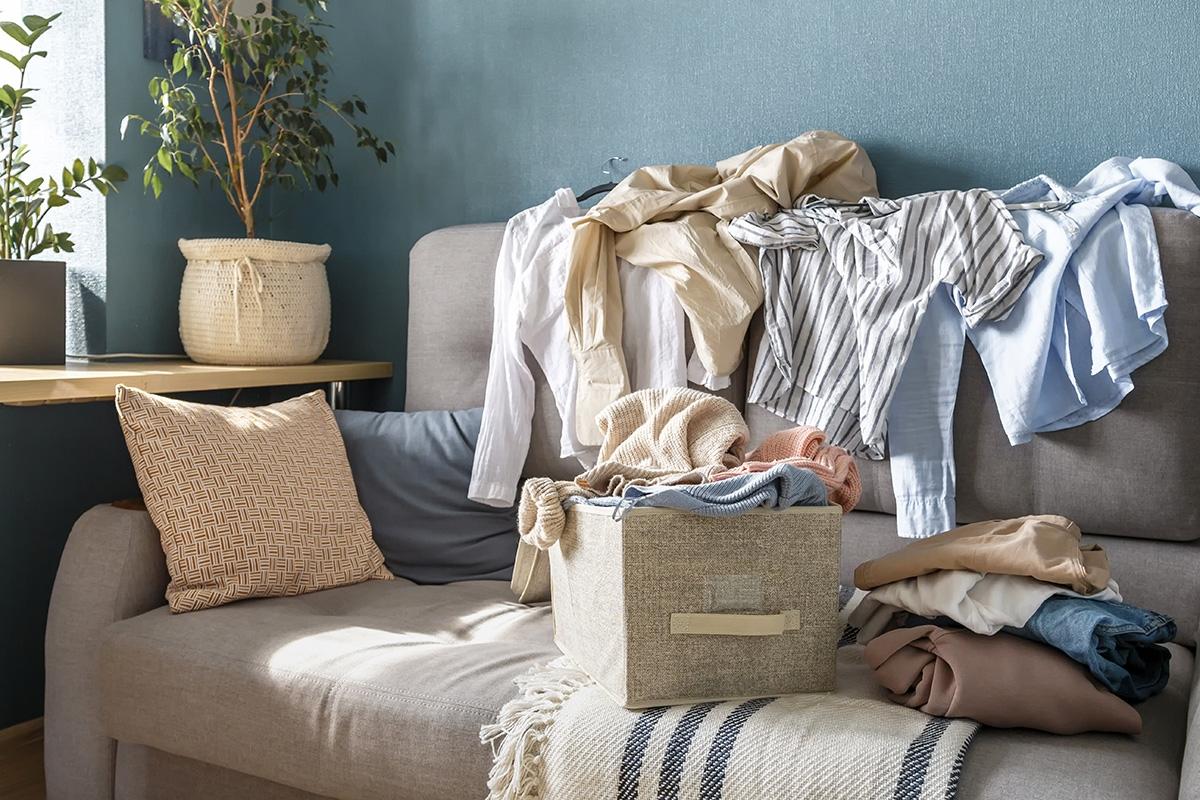
The pile method, aka chaos decluttering, is exactly what it sounds like: take everything out and dump it in one spot. You can do this with an entire room or start with smaller areas like a closet, vanity, or junk drawer. It may look overwhelming at first, but it helps you see everything you own and gives you a clean slate to organize what stays.
Reverse declutter method: pick out the items you love
Reverse declutter method reframes the process to focus on what you love. Instead of starting with what to get rid of, you begin by choosing what you want to keep. This puts a positive spin on a chaotic and stressful task and makes it easier to go through the rest of the items as you already know what matters less to you.
Declutter Tips
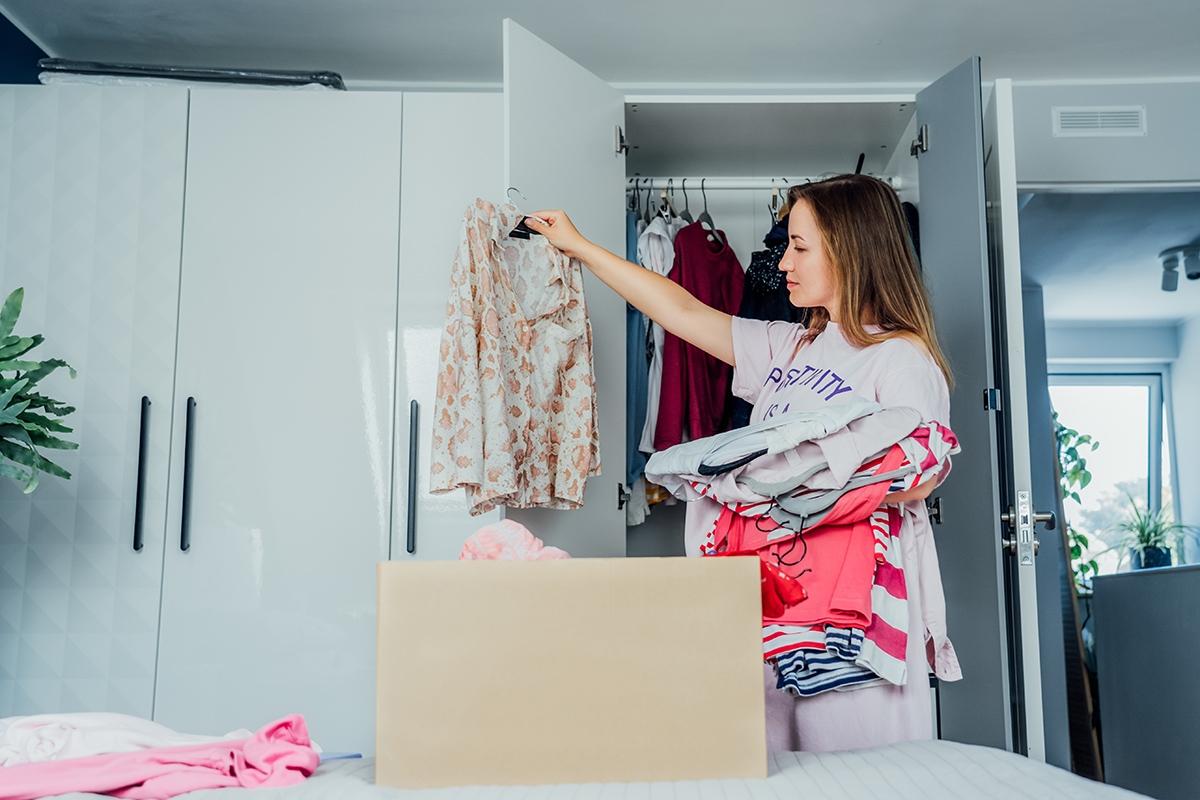
Decluttering methods give structure to the process, but to make it even easier for yourself, here are a couple of decluttering tips:
- Use the 20/20 rule: If you can replace an item in 20 minutes for less than $20, it may not be worth keeping.
- Try out the 90-90 decluttering rule: Think if you have used the item in the last 90 days. If not, then think about whether you will use it in the next 90 days. If “no” was your answer to both questions, then you can probably get rid of that item.
- Start where it will help the most: If you’re struggling with where to get started, pick somewhere that could make your daily routine easier, like your entryway, bathroom, or kitchen counter.
- Take the easy wins: Start with items that are clearly ready to go, such as expired food, old medication, dried-out makeup, or duplicates.
- Declutter before buying storage: Wait until you know what you are keeping before you buy bins, baskets, or organizers. Otherwise, you may end up with too much storage or the wrong kind.
- Take a photo of sentimental items: If you are on the fence about keeping an item for emotional reasons, consider whether a photo would preserve the memory just as well.
- Use the reverse hanger declutter hack: Hang all your clothes with their hangers backwards in your closet. After you use an item, return it to the closet with the hanger facing the normal direction. After a few months, take a look at what is still hanging backward. Those items are ones you don’t use and can consider selling, donating, or trashing them.
How to Stay Clutter-Free
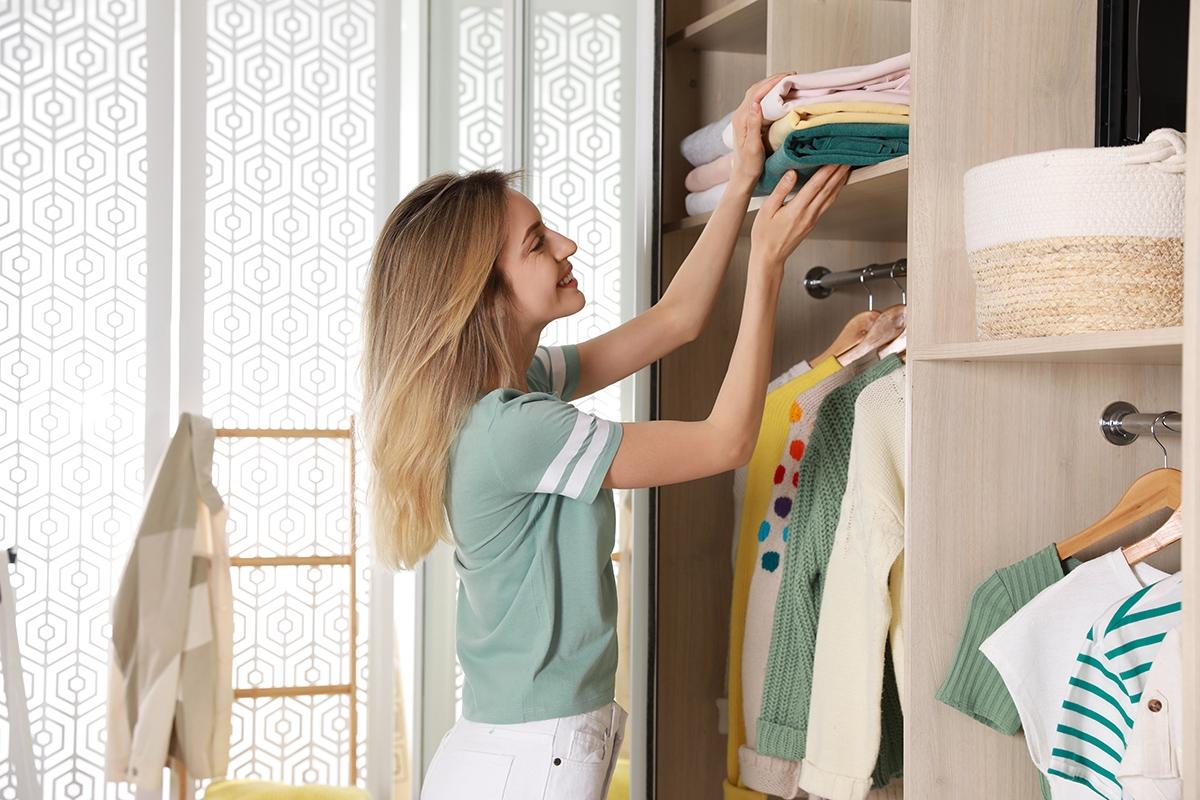
After you’ve put in the work to declutter, you want to enjoy the fruits of your labor. To keep your apartment clutter free, try incorporating these simple habits:
- Use the one-in, one-out rule: Anytime you buy something new, something old has to go.
- Every item has a home: Every object should have a place where it belongs; if it doesn’t, then it’s likely to become clutter.
- Turn deliveries into decluttering: When you get rid of the empty box from your package, an item has to go out with it.
- Put items away: Properly put objects back where they belong, rather than letting it all pile up.
- Do decluttering refreshes: A bit of decluttering time each week prevents buildup in your apartment.
Find the Perfectly-Sized Apartment on Apartments.com
Whether you need more room or less of it, Apartments.com makes it easy to find the right fit. Use bedroom, bathroom, and square footage filters to narrow your search and find a home with the space you need. With the right tools to refine your search, finding an apartment that fits your needs is simple.
FAQs
How do you declutter a small apartment?
Decluttering a small apartment works best when you use a simple method and break the process into manageable steps. In a small space, it also helps to take easy wins first, avoid buying storage before you finish decluttering, and use habits like giving every item a home and following the one-in, one-out rule to keep clutter from building up again.
Where should you start decluttering?
A good place to start decluttering is anywhere that will make your daily routine easier right away, such as your entryway, bathroom, or kitchen counter. Begin with obvious items that are ready to go, like expired food, old medication, dried-out makeup, broken items, or duplicates. Starting with easy decisions builds momentum and makes the rest of the process feel less overwhelming.


