

Oregon is one of the most scenically striking states in the country with a landscape that is engrained in its residents’ lives. Tucked between the Pacific Coast and the Cascade Mountain Range, the climate ranges from rainforests to desert areas, with the Willamette Valley and River adding life and activity. Whether you're attracted to the craft brewery culture and bookstore-lined streets of Portland, the river trails and academic legacy of Eugene, or the sun-soaked Bend, each city of Oregon offers an individual experience and identity.
Oregon's rent market sits slightly below the national average for a one-bedroom apartment, which is rare for the west coast. This is especially uncommon for a state with a city like Portland, which ranks as one of the cities with the best parks in the entire nation. Smaller cities like Salem and Medford offer noticeably lower rents and quieter day-to-day lives, making the state appealing for a wide range of renters.
What to Know About Living in Oregon
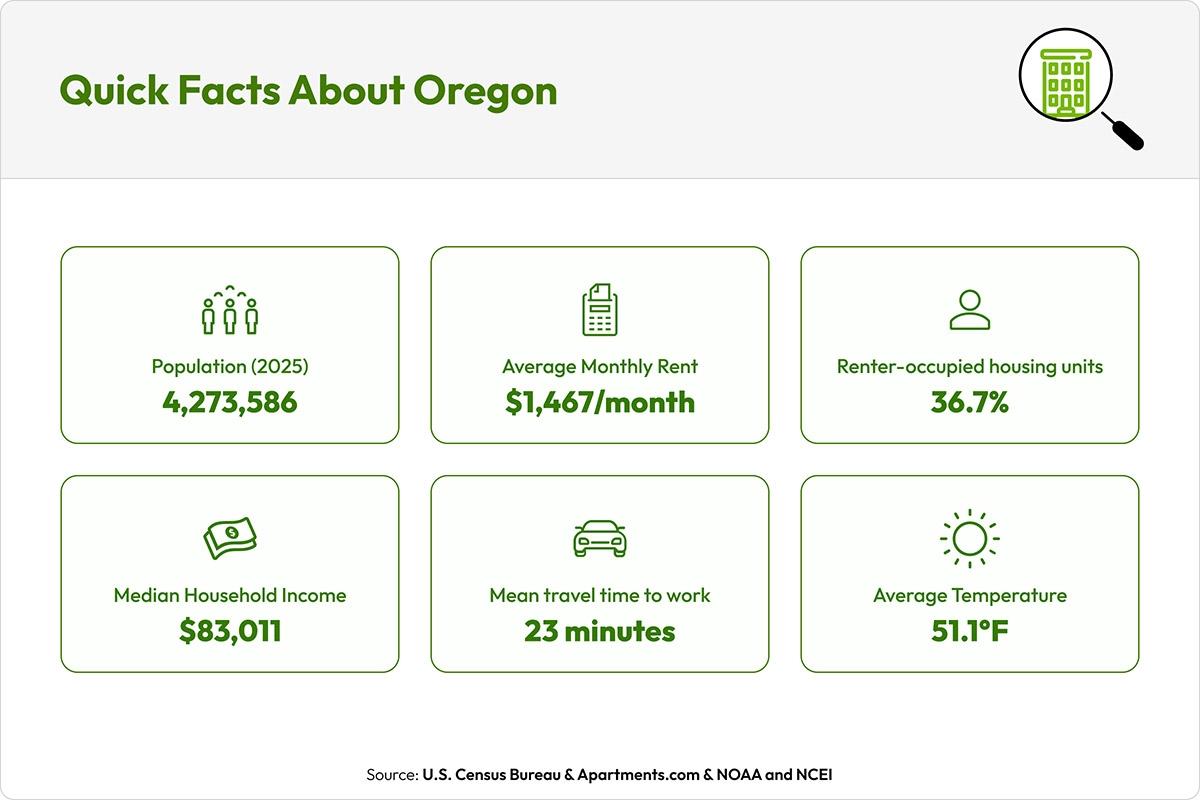
If you’re pondering Oregon, you’ll want to look at more than just the lifestyle. Whether you’re considering a move or just curious about the Beaver State, here's a snapshot of key statistics that paint a picture of life in Oregon:
Is Oregon a Good Place to Live?
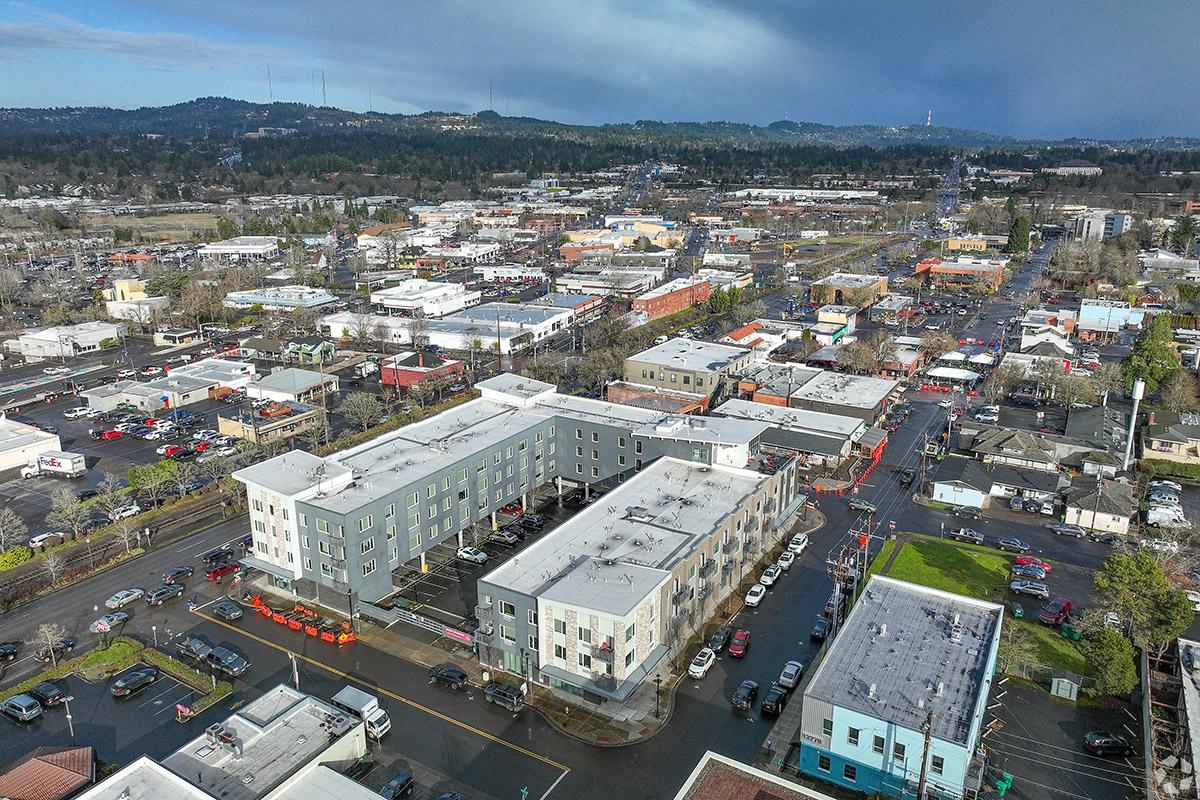
For renters prioritizing access to the outdoors, urban spots, and an active cultural scene, Oregon has a lot to offer. Mountains, ocean, rivers, and city life are all within a few hours of each other. The state’s outdoor recreation culture means that activities like hiking, cycling, skiing, windsurfing, and paddling are part of daily routines instead of limited to special occasions. Yet, there’s still a strong city atmosphere in select metros where residents crowd streets as they visit shops and restaurants while events and festivals fill the calendar.
The economy in Oregon is just as varied as its landscape, with cities specializing in different industries that create a diverse base, including technology, natural resources, activewear and outdoor gear, and manufacturing. Portland’s economy spans transportation, technology, outdoor apparel, higher education, and healthcare, with its ports, “Silicon Forest” tech scene, athletic and outdoor gear companies, and expansive health campuses. Eugene centers on the University of Oregon, which shapes the city’s job market through education, research, healthcare partnerships, student services, and the steady demand created by a large university population.
Oregon's overall cost of living is a reasonable trade for what the state offers. Portland is the state’s priciest city at 16.2 percent higher than the national average. Housing, groceries, transportation, healthcare, and goods and services all run high, though utilities are slightly cheaper. Smaller cities like Salem and Medford can provide better affordability, though costs can vary. While you may find that housing prices are cheaper, other expenses can still be on the pricy side.
Is It Expensive to Live in Oregon?
Oregon's rental costs vary significantly depending on where you land. Here's what renters can expect across the state:
|
Property Type |
Average Rent |
Average Sq. Ft. |
|
$1,467/month |
655 sq. ft. |
|
|
$2,315/month |
1350 sq. ft. |
|
|
$2,658/month |
1082 sq. ft. |
|
|
$2,528/month |
1192 sq. ft. |
Compared to the national average rent of $1,642 for a 1-bedroom apartment, living in Oregon is cheaper than what renters pay in many other states. Over the past year, rents have dropped 0.4 percent, leading to prices in Oregon being 11 percent lower than the national average. However, costs vary considerably depending on the city.
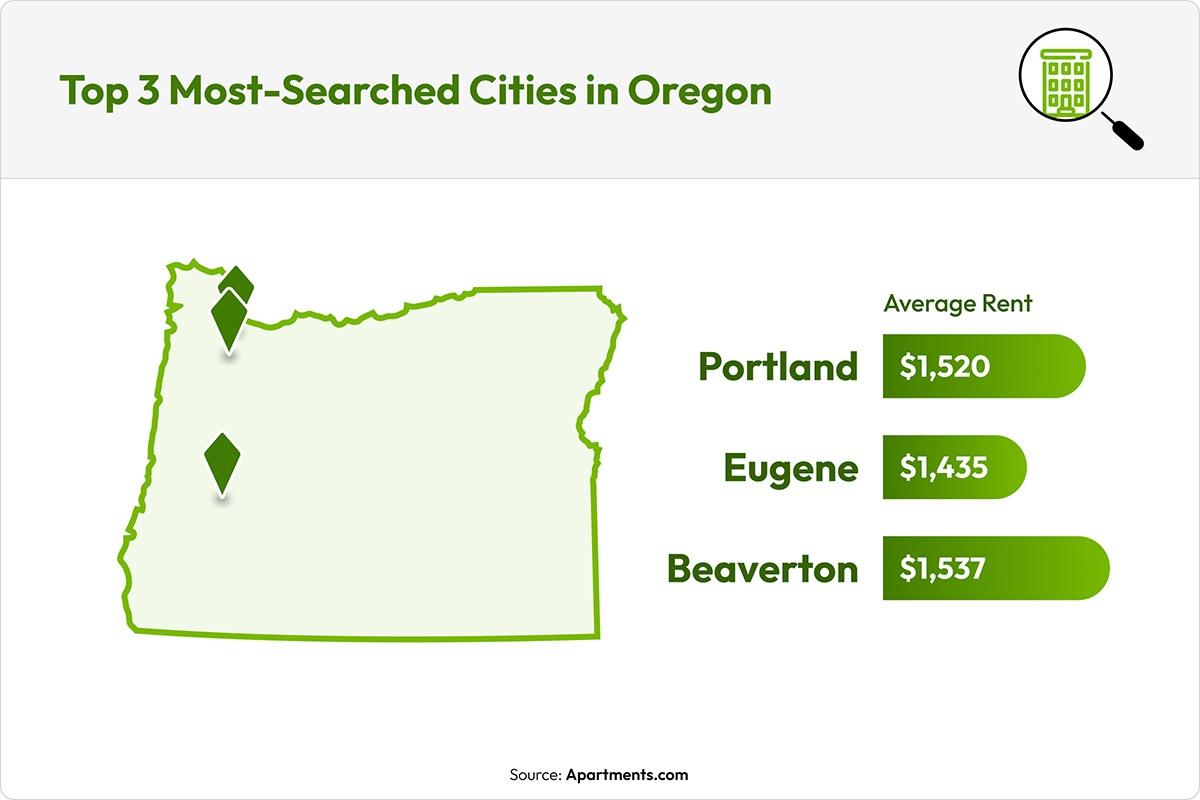
Portland is one of the more expensive cities in Oregon, but rents are still seven percent cheaper than the national average. Renters typically pay about $1,520/month in Portland, while getting access to both some of the state’s best outdoor recreation and a bustling city.
The cheapest cities in Portland include Medford and Salem, where renters can get more breathing room in their budget. The average 1-bedroom in Medford goes for about $1,179/month while Salem 1-bedrooms generally run around $1,203/month. Both cities have rent prices a little more than a quarter lower than the national average.
What Are the Best Places to Live in Oregon?
|
Top Cities in State |
Average 1-Bedroom Rent |
|
$1,520/month |
|
|
$1,435/month |
|
|
$1,537/month |
|
|
$1,203/month |
|
|
$1,752/month |
|
|
$1,184/month |
|
|
$1,616/month |
|
|
$1,179/month |
|
|
$1,381/month |
|
|
$1,525/month |
|
|
$1,885/month |
|
|
$1,171/month |
|
|
$1,255/month |
|
|
$1,629/month |
Portland is Oregon's largest city, with a population of over 630,000 and a metro area of around 2.5 million people. It's the cultural and economic epicenter of the state, home to more than 1,200 tech companies, alongside global brands like Nike and Adidas. Each neighborhood in the city has its own energy, from the never-ending movement in Downtown Portland and its high-rises to Uptown Portland’s independently owned eateries. All of this is connected by TriMet's MAX light rail that stretches from the suburbs to the city center.
Eugene, home to the University of Oregon, is a compact city of about 176,000 that has an energy bigger than its size. Downtown Eugene and the area around the neighborhood support a lively arts, dining, and nightlife scene for a rent price that’s in line with the state average. Known internationally as Track Town, USA, Eugene is the birthplace of Nike and hosts the NCAA Track & Field Championships at Hayward Field. The Ruth Bascom Riverbank Path System and Alton Baker Park provide miles of trails within the city. Outdoor options expand right outside the city borders thanks to multiple mountains and ridges connected by the Ridgeline Trail.
Salem, the state capital since 1851, is one of the most affordable cities in the state, yet it has the second largest population. Situated in the heart of the Willamette Valley, it's driven economically by state government, Salem Health, and Willamette University. Commuters appreciate the Amtrak rail service to Portland and Seattle, the Cherriots bus network, and I-5 and other highway entry points. The riverfront, Minto-Brown Island Park, and nearby wine country give residents plenty to do on weekends.
Bend is Central Oregon's outdoor recreation hub, set against the backdrop of the Cascade Mountains on the Deschutes River. Once a logging town, it's now known for year-round skiing at Mt. Bachelor, world-class mountain biking on Phil's Trail, and a thriving craft brewery scene along the Bend Ale Trail. Rent is higher here than anywhere else on the list, reflecting demand from those who want easy access to mountains and trails without sacrificing city-level conveniences. OSU-Cascades and St. Charles Health System are key employers.
Medford, in the heart of Southern Oregon's Rogue Valley, is also one of the more affordable cities on this list. However, it's also one of the most geographically isolated places, sitting about three hours from Portland, but offers its own appeal: proximity to Crater Lake National Park, the Bear Creek Greenway, a quality performing arts scene at the Craterian Theater, and an international airport (Rogue Valley International–Medford) with direct flights to major West Coast cities. Healthcare is a main economic driver, with Asante Rogue Regional and Providence Medford Medical Center employing many residents.
What to Expect from Oregon Weather
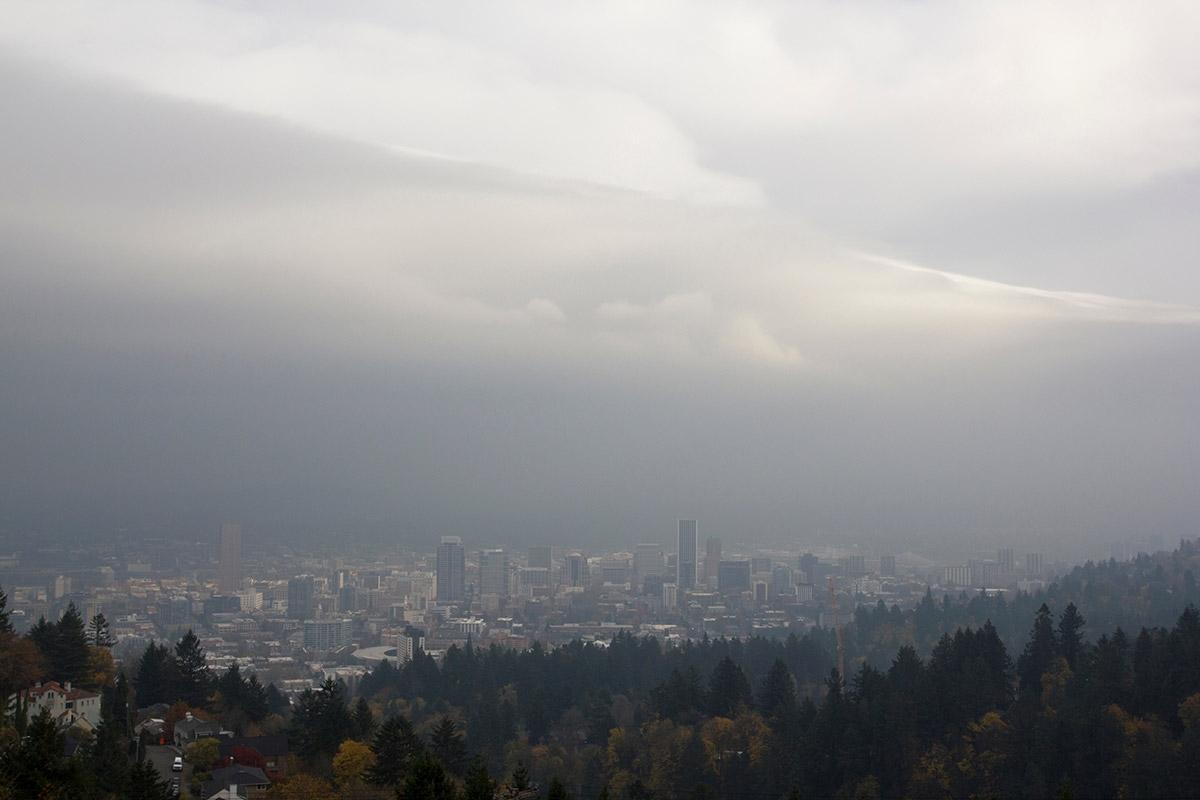
Oregon's climate is one of the most varied of any state, shaped more by its varying geography rather than the state’s latitude. The Cascade Mountains divide the state into two dramatically different climate zones: the mild, wet west and the dry, sunny east. Statewide averages blend both zones, but most renters will experience one distinct climate or another depending on where they live.
Based on NOAA and NCEI statewide climate data:
|
Average Temperature* |
51.1°F |
|
Average Precipitation* |
24.31” |
|
Temperature Range Jul 2025 |
52.7°F-84.0°F |
|
Temperature Range Jan 2026 |
28.7°F-45.6°F |
*Averages from April 2025-March 2026
Summer (June–August)
The western valleys (Portland, Eugene, Salem) typically see temperatures in the mid-60s to low 80s°F, with long stretches of dry, sunny weather. Bend averages highs in the upper 70s to mid-80s°F, with cool nights. The Rogue Valley around Medford runs warmer, regularly reaching the upper 80s to low 90s°F. Eastern Oregon can push past 95°F in July.
Winter (December–February)
Western Oregon winters are mild but persistently grey and wet. Portland and Salem typically see temperatures in the mid-30s to low 40s°F, with frequent rain and occasional ice events. Snow is rare in the valleys, but it happens. Bend, sitting at nearly 3,600 feet, gets genuine winter snow and temperatures that regularly dip into the 20s°F at night. The Rogue Valley tends to be milder than Bend in winter, typically staying in the 30s–40s°F.
Additional weather considerations
Oregon's fire season has intensified in recent years, particularly in eastern and southern parts of the state, bringing smoky air conditions in late summer and early fall. The Oregon Coast experiences fog and strong Pacific winds year-round. And while Portland rarely gets heavy snow, ice storms can bring the city to a standstill for a day or two.
What Are the Pros and Cons of Living in Oregon?
Oregon offers natural beauty, lively cities, and plenty of outdoor opportunities, but it isn’t the right fit for every renter. Here’s how the pros and cons of living in Oregon stack up.
Pro: no sales tax
Oregon is one of only five states in the country with no sales tax, which is a significant benefit for residents. Everything from groceries and clothing to furniture and electronics is purchased at the sticker price. For renters who are already managing monthly expenses carefully, this adds up over the course of a year.
Con: limited transit outside major urban areas
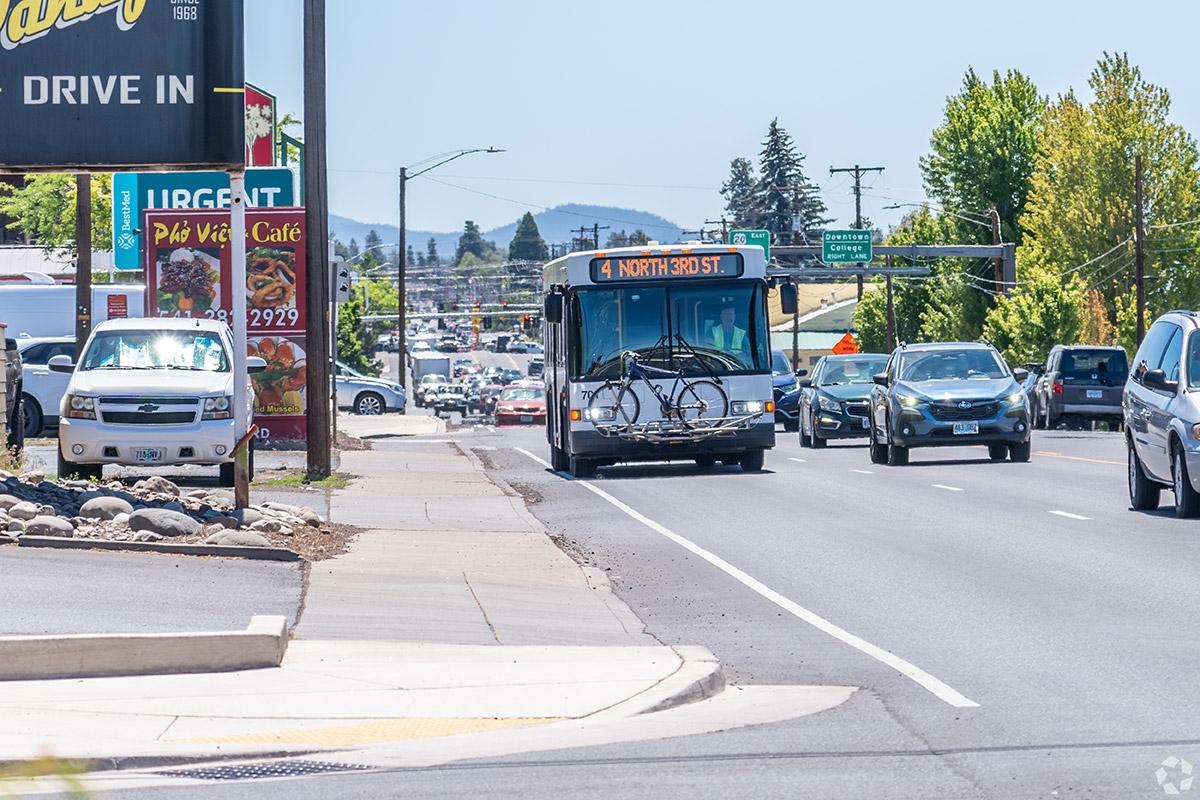
Once you leave Portland, public transit options become limited. While most cities have bus routes, the frequency and coverage vary. Eugene’s comprehensive system, run by the Lane Transit District, was developed to meet the needs of those involved with the university. Smaller cities lack this network, so cars are a necessity for everyday life. For renters who don't own a car or are looking to reduce car dependence, the lack of robust transit outside the Willamette Valley can present a challenge.
Pro: outdoor access from almost every city
Whether you're in Portland with its countless parks and trails, Eugene where the Ridgeline Trail connects multiple peaks and ridges, or Bend surrounded by Deschutes National Forest, Oregon offers year-round outdoor recreation at a scale that's hard to match.
Hiking, mountain biking, kayaking, swimming, and more are all within reach of major cities. It’s not limited to one season, either; the geography provides the perfect setting for winter sports, such as skiing, snowboarding, and snowshoeing. Get active during any time of the year when you live in Oregon.
Con: year-round rain and grey skies
The downside of Oregon's lush green landscape is the rain that comes with it. Portland, Salem, and Eugene average roughly 140–145 cloudy days per year, with rain falling consistently from October through May. True downpours are rare since rain tends to be persistent drizzle, but the extended grey stretch of an Oregon winter can wear on people. It's one of the most commonly cited reasons people leave the Willamette Valley, meaning it’s worth taking into account before making the move to Portland or other Oregon cities.
Pro: an ever-evolving food scene is at your doorstep
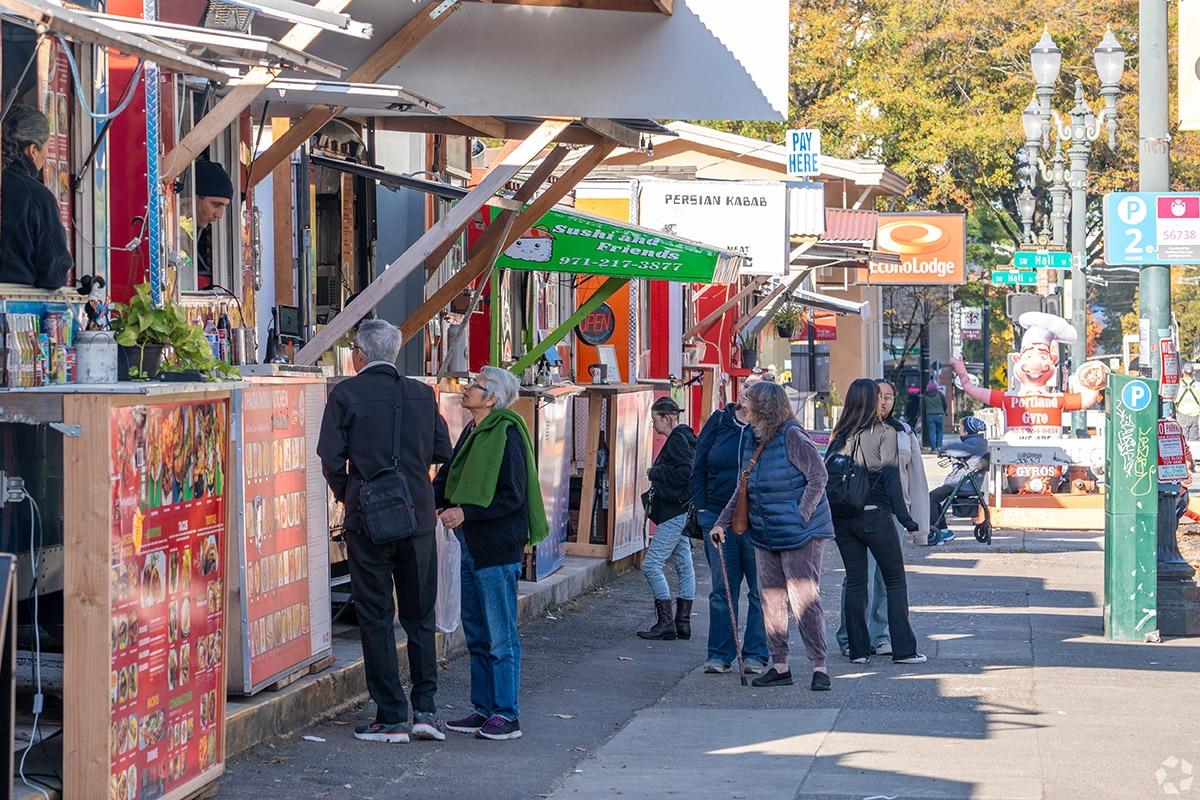
A huge advantage of living in Oregon is having its constantly changing food scene at your fingertips. From locally-caught seafood to freshly-made wine, each city has its own signature cuisines. The Willamette Valley is one of the world's premier Pinot Noir regions, putting world-class wineries within a weekend trip of Portland, Eugene, and Salem. Portland is nationally known for its food cart pods, robust craft brewery scene, and independent coffee roasters that rival Seattle's. Salem's restaurants draw from surrounding farm and orchard harvests, Medford anchors the Rogue Valley wine country dining scene, and Bend has built a sophisticated food culture around its famous Ale Trail and growing roster of chef-driven restaurants.
Con: wildfire smoke season
Oregon's fire season has grown more intense in recent years. Late summer and early fall can bring extended periods of smoky air with elevated particulate levels, occasionally affecting air quality. The smoke season can compress the usable outdoor summer months.
Pro: Oregon is a pet- and dog-friendly place to call home
Oregon’s outdoor lifestyle makes it especially appealing for renters with dogs. Many of the state’s best everyday amenities, from neighborhood parks to riverfront paths and forested trails, are easy to enjoy with a leash, a waste bag, and a little planning. Oregon State Parks also allows pets in many park areas, which means weekend hikes, camping trips, and coastal getaways don’t always require leaving your dog behind.
Some Oregon cities take that dog-friendly reputation even further. Portland has more than 30 dog off-leash areas across its park system, giving renters plenty of places to let their dogs run and socialize. Renters aren’t limited to a few neighborhoods as many of Portland’s neighborhoods love dogs. Eugene also has fenced dog parks, off-leash areas, and amenities like wash-down stations and dog waste bag dispensers at select parks. In Bend, parks, trails, and open spaces are a major part of daily life, making it a strong fit for renters who want a home base near dog-friendly outdoor recreation.
Start Enjoying Oregon Today by Searching on Apartments.com
Oregon is a good place to live for renters who appreciate the outdoors, city opportunities, and a food and cultural scene that reflects the state's commitment to local and independent character. The statewide rent picture is encouraging since Oregon sits right at the national average, and smaller cities like Salem and Medford offer meaningful affordability that often gets overlooked in favor of Portland's outsized profile.
That said, living in Oregon comes with trade-offs. Portland's higher cost of living demands honest budget planning, western Oregon's extended rainy season is not for everyone, and the state's growing wildfire smoke season is a factor to strongly consider. But for renters who know what they are getting into, Oregon is a hard state to beat: no sales tax, mountains within 30 minutes of the city, world-class cycling infrastructure, and a rental market that hasn't experienced the volatility of some neighboring states.
Whether you're drawn to Portland's food carts, Eugene's riverfront running paths, Salem's Willamette Valley wineries, Bend's mountain town energy, or Medford's affordable outdoor opportunities, there's a corner of this state worth considering. Ready to find your next apartment? Browse available rentals across Oregon on Apartments.com and see what's available in the cities that interest you most.
Methodology
All rent trends and cost-of-living information comes from CoStar Group and Apartments.com. Weather data is provided by the NOAA and NCEI. The U.S. Census Bureau supplied the median income data, median commute times, and the percentage of renter-occupied housing units.
FAQs
Is Oregon a good state to live?
Oregon is a strong option for renters who value outdoor access, urban transit, and a Pacific Northwest lifestyle. The statewide average rent of $1,467/month for a one-bedroom is right at the national average, though costs vary significantly by city. Portland runs notably higher, while Medford and Salem offer real affordability. The state has no sales tax, well-developed transit in Portland and Eugene, and access to mountains, coast, and wine country within a reasonable drive from most cities.
What are the benefits of living in Oregon?
Oregon's key advantages for renters include no state sales tax, excellent public transit in Portland (MAX light rail, Portland Streetcar, extensive bike lanes) and Eugene (EmX), outstanding year-round outdoor recreation, a stable rental market with flat-to-declining rents in most cities, and a food and culture scene rooted in local farms, craft brewing, and independent businesses. Smaller cities like Salem and Medford offer West Coast living at below-national-average rent.
What is the cost of living in Oregon?
While the cost of living in Oregon largely depends on where you live, in general it is lower than the national average. In major cities, like Portland, the cost of living is 16.2 percent higher than the national average. However, in smaller cities it often drops, though remote areas can still be pricey.
What are the best places to live in Oregon?
The best cities for renters in Oregon depend on the lifestyle, budget, and amenities that matter most. Portland is the top choice for renters who want the state’s largest city, strong transit, and the widest range of restaurants, jobs, and cultural amenities. Eugene is ideal for renters looking for a university-town feel with strong trail access and bus rapid transit. Salem offers more affordability, Amtrak service, and easy access to the Willamette Valley. Bend appeals to renters who want a mountain-town lifestyle with year-round outdoor recreation. Medford provides one of Oregon’s most affordable major rental markets, along with access to Crater Lake and Rogue Valley wine country.


