

Floors get more wear than almost any other part of your home. Every day brings foot traffic, rolling chairs, dropped dishes, spilled drinks, and maybe a pet or two.
Normal wear and tear is expected, but damage beyond that can come out of your security deposit when you move out. A little routine care during your lease goes a long way.
Everyday Flooring Care
Small habits do most of the work of protecting your floors.
- Clean regularly. Vacuum or sweep at least weekly. Dirt and grit act like sandpaper underfoot, and stains are far easier to remove when they're fresh.
- Use a welcome mat. A mat at the front door catches dirt and moisture before it spreads and reminds guests to wipe their feet. A shoe-free home is even better.
- Deal with spills right away. Blot liquids as soon as they happen so they don't soak in, stain, or seep into seams.
- Put rugs where traffic is heaviest. Hallways, entryways, and living rooms benefit from rugs or runners. Choose rugs with a breathable, non-staining backing so they don't mark the floor underneath.
- Use furniture pads. Felt pads under chair and table legs prevent scratches and dents. Lift heavy furniture instead of dragging it, and use a chair mat under rolling office chairs.
Tips for Your Flooring
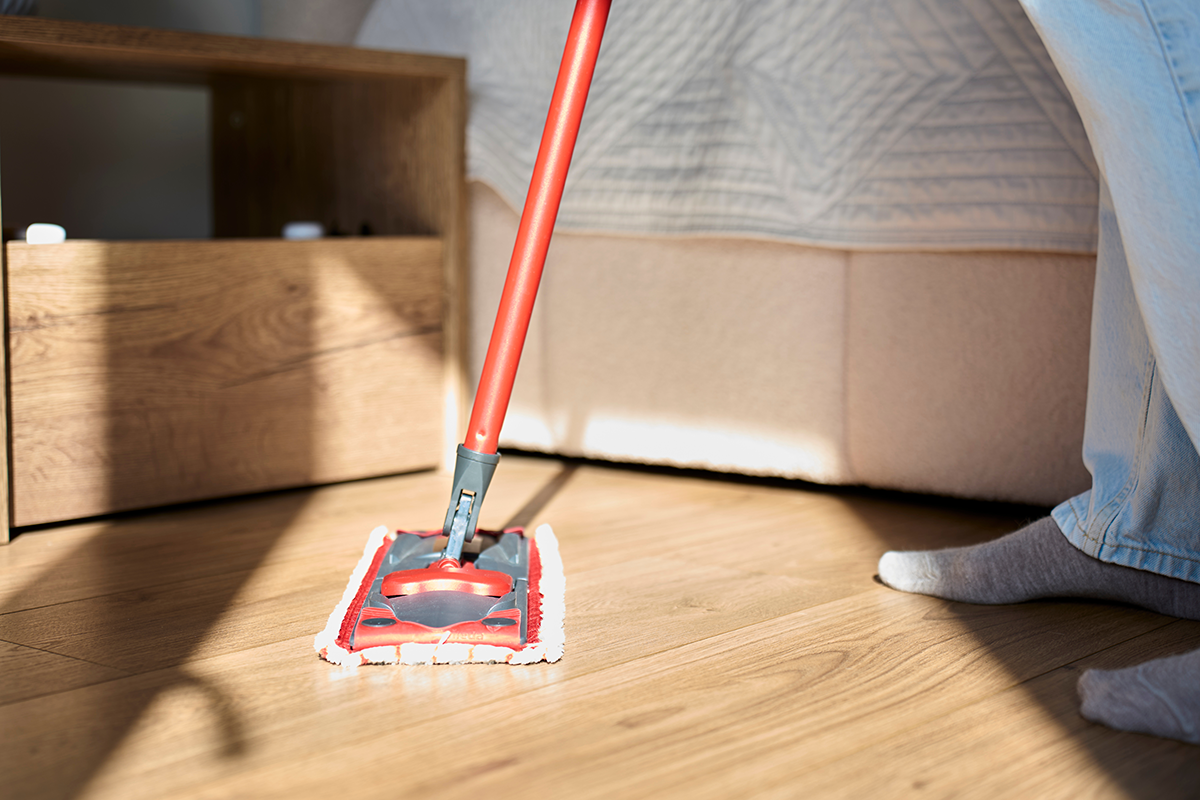
Here are some key tips for different types of flooring. Every flooring material requires different care and cleaning products, so make sure you know what you’re dealing with.
How to maintain wood floors
Water is the biggest enemy of wood floors, so wipe up spills immediately. Moisture can seep between boards and cause warping or staining. When you mop, use a damp mop rather than a sopping wet one.
Ask your property manager about the type of wood and finish so you choose the right cleaner. Warm water with a small amount of mild soap is generally the safest option, because strong chemicals can strip the protective finish.
How to maintain carpet
Vacuum often so dirt doesn't work its way deep into the fibers. When a stain happens, blot it with a clean cloth instead of rubbing, which spreads the stain and pushes it deeper. Use a carpet cleaner made to lift stains without discoloring or damaging the fibers, and test it on a small spot in a corner or under a sofa first.
Moving days are hard on carpet, so consider a temporary carpet protector film when you move in or out. Before you leave, a deep clean can help boost your chances of getting your deposit back. Check your lease to see whether it's required.
How to maintain tile
Keep an eye on the grout, because cracked, chipped, or missing grout can let water reach the subfloor. Tell your property manager so it can be repaired before it becomes a bigger problem. For cleaning, stick with a mild cleaner and avoid abrasive scrubbers that can dull the tile or wear down the grout.
How to maintain your floors when you have pets
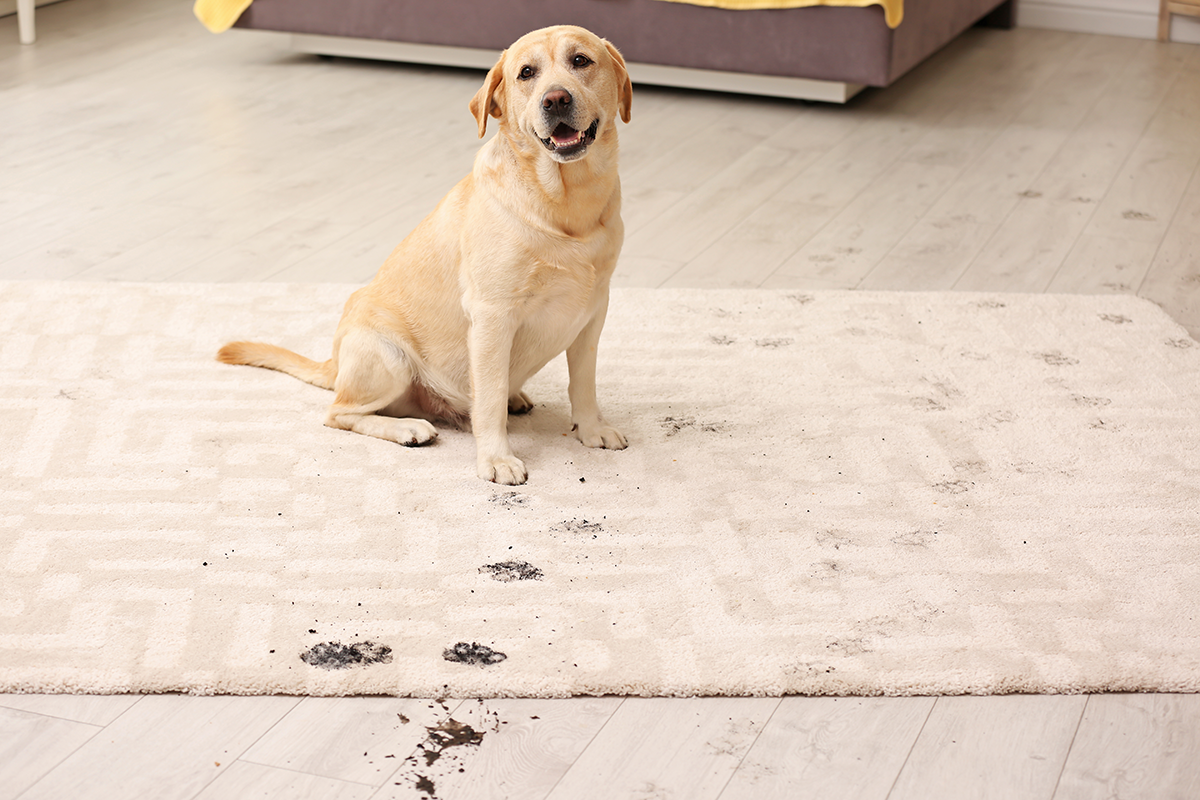
Pets are rough on floors; cats can mark on carpet, dogs can have accidents if left alone too long, and sharp claws can scratch wood.
Generally, keeping nails trimmed can prevent scratches and snags, placing washable mats under food and water bowls can catch spills, and offering frequent bathroom opportunities can prevent accidents. Here are some pet-specific tips.
For dogs:
- Regular walks and bathroom breaks can reduce the chance of accidents.
- Keep a towel by the door to wipe off muddy or wet paws after going outside.
- Rugs and runners can give dogs better traction on wood or tile, preventing skidding that can scuff floors.
- Crate training can keep chewing enthusiasts away from carpets and baseboards when unsupervised.
For cats:
- Place mats with textured surfaces under litter boxes to catch scattered litter before they scratch hard floors or work into carpet.
- Sweep or vacuum stray litter regularly.
- Scoop the litter box daily and keep it clean, since cats who dislike their litter box are more likely to go elsewhere.
- Place scratching posts around your apartment so claws stay off the floor.
Both cats and dogs value structure, so stick to a schedule for meals and playtime. Predictability and regular enrichment can go a long way toward preventing bathroom accidents or destructive behavior. If an accident does happen, blot the area right away and use an enzyme-based pet odor remover so stains and smells don’t set in.
Keeping your floors in good shape comes down to a few key habits: clean regularly, deal with messes quickly, and report problems early. Do that, and you’ll enjoy your floors all lease long and give yourself the best chance of getting your full security deposit back.
This article was originally published on July 8, 2014, and has been updated.


