

Key takeaways:
- Your lease is the first place to look for snow-removal responsibilities, especially in single-family rentals.
- Landlords or property managers typically handle snow in common areas, while renters may be responsible for private walkways, private patios, and (if renting a house), sidewalks and driveways.
- State law and local ordinances can override or add to lease terms, so it’s smart to check both.
- If snow and ice create a safety hazard, document it and report it in writing to your landlord or property manager.
In a Nutshell:
In most rentals, snow removal responsibility comes down to who controls the area that needs to be cleared.
- Landlords are often responsible for common areas they control, like shared sidewalks, entryways, stairs, parking lots, and communal paths.
- Renters may be responsible for areas they exclusively control, like a private driveway or front walk at a single-family rental, especially if the lease assigns that duty.
That said, the details can change fast once you factor in your lease language, state habitability rules, and local snow ordinances.
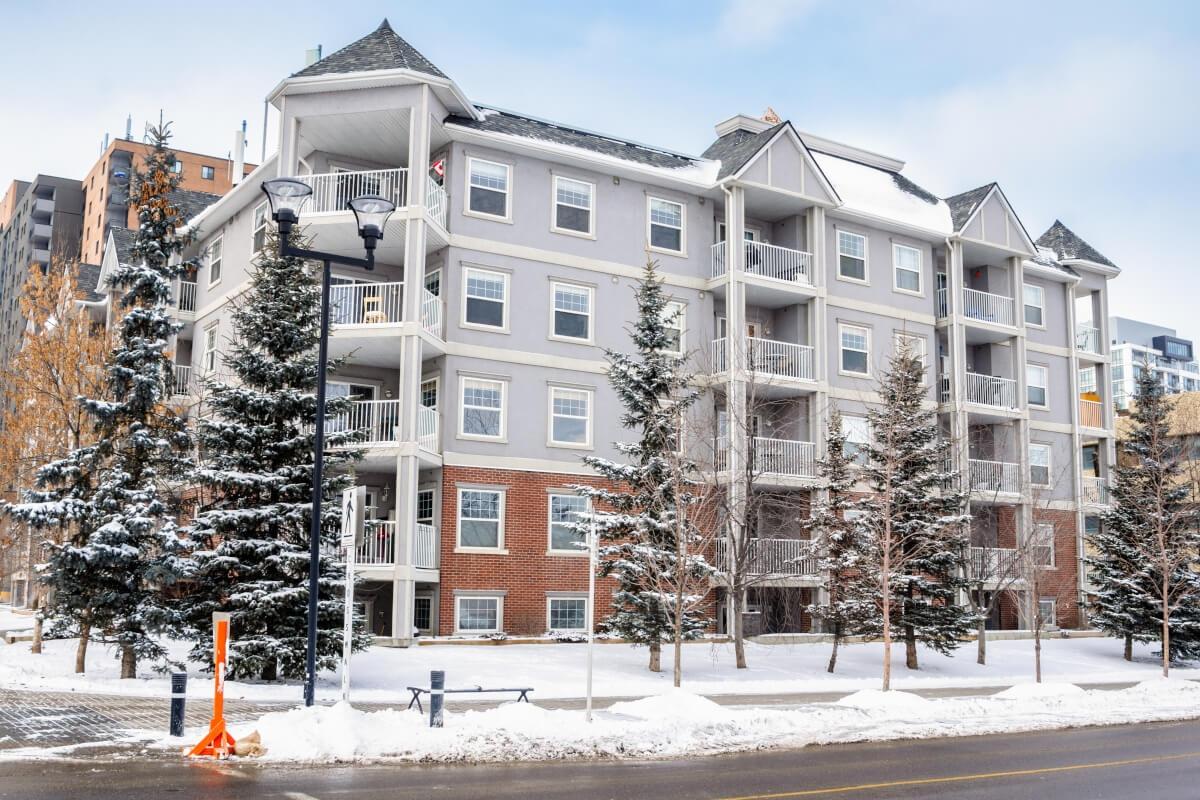
Check Your Lease
Your lease is the best starting point because it may spell out who handles “seasonal maintenance,” including snow and ice removal. Look for sections labeled:
- Maintenance
- Groundskeeping / yard care
- Common areas
- Tenant duties
In a single-family rental, it’s more common to see snow removal listed alongside mowing, leaf cleanup, and similar tasks. In many apartment communities, the lease may be silent on snow removal, or it may cover it broadly under “common area maintenance.”
If the lease is unclear, don’t guess. Ask the landlord or property manager to verify in writing what they expect, including:
- Which areas you’re responsible for (front steps, driveway, sidewalk, etc.)
- Whether supplies are provided (salt, shovel)
- Timing expectations (for example, “within X hours of snowfall”)
Use the “Control” Rule: Private Areas vs. Common Areas
When you’re trying to answer, “who is responsible for snow removal,” it helps to map the property into two buckets:
Common areas (usually the landlord’s responsibility)
- Shared sidewalks and walkways
- Building entrances and vestibules
- Shared stairs and ramps
- Parking lots and shared drive lanes
- Common patios, courtyards, and mail areas
Private-use areas (may be your responsibility, especially in houses)
- A private driveway
- A private front walk or steps used only by your household
- A private porch, stoop, or side entry used only by you
Liability and safety expectations often track with who retains control of the area. If the landlord controls it (common areas), the landlord typically has a stronger duty to keep it reasonably safe. If you control it (private-use areas), the lease may push more responsibility onto you.
If you’re not sure what’s “common,” look at what you share with neighbors. If everyone uses it to access their homes, it’s likely common.
Look Up Your State’s Landlord-Tenant Rules for Safety and Habitability
Even when your lease assigns snow removal to a renter, many states still require landlords to provide a safe, livable home and maintain certain parts of the property. Those rules may not mention snow specifically, but they can shape what a landlord must do, especially for common areas and building access.
A practical approach:
- Search your state’s official landlord-tenant resources (often hosted by a state consumer protection office, housing agency, or attorney general).
- Look for terms like “maintenance,” “common areas,” “safe condition,” or “duty of care.”
- If you live in an apartment community and snow blocks entries, stairs, ramps, or shared paths, treat that as a safety issue, not just a convenience issue.
Don’t Skip Local Ordinances: Sidewalks Could Trip You Up
Local snow ordinances can be stricter and more specific than a lease. Many cities require that snow and ice be cleared from sidewalks within a set number of hours after snowfall ends. Some ordinances place that duty on:
- The property owner
- The occupant
- Or the owner and/or occupant (meaning it can depend on the situation)
This is where renters (especially house renters) can get surprised. You might assume the sidewalk is the landlord’s issue, but your city may expect the occupant to clear it, or your lease may shift that duty to you.
How to find your local snow removal ordinance
Use this checklist:
- Go to your city or county website and look for “Municipal Code,” “City Code,” or “Ordinances.”
- Search within the code for: snow, ice, sidewalk, obstruction, right-of-way, or abutting.
- Check for the time limit (for example, 12, 24, or 48 hours) and whether there are rules about de-icing or leaving a passable path.
- If the site is hard to search, call your city’s information line (often 311) and ask what the current rule is for sidewalk snow removal.
What to Do If Snow Isn't Being Cleared
If you believe your landlord is responsible (or you’re unsure), focus on safety and documentation.
What to do
- Notify your landlord or property manager in writing (email or resident portal message is fine).
- Include photos, the date/time, and the specific location (“front steps,” “east stairwell,” “ramp by the mailbox”).
- Ask for a timeline for clearing and de-icing.
- If it’s urgent (blocked exit, slippery stairs, inaccessible ramp), say so plainly.
What not to do
- Don’t withhold rent without understanding your state’s rules.
- Don’t hire someone yourself and subtract the cost from rent unless your lease and local laws clearly allow it.
Glossary of Terms to Know
|
Term |
What It Means |
Why It Matters for Snow Removal Responsibility |
|
Snow removal |
Clearing accumulated snow from walking/driving surfaces (shoveling, plowing). |
The core duty in dispute: who must do the clearing and where. |
|
Ice removal / De-icing |
Reducing slippery ice using salt, sand, or other de-icers. |
Even if snow is cleared, ice can remain a safety hazard and affect liability. |
|
Common areas |
Shared spaces used by multiple tenants/guests (e.g., shared entryways, stairs, halls, shared walkways, parking lots). |
These are typically controlled/maintained by the landlord or property manager. |
|
Private-use areas |
Areas used only by one household (e.g., a private front walk, private porch, private driveway for a single-family rental). |
Leases often assign these duties to the tenant, especially in single-family rentals. |
|
Exclusive use |
The tenant is the only one who uses that area (no shared access). |
Helps classify an area as “private-use,” which can shift responsibility to the tenant. |
|
Control (control-of-area rule) |
Who has the authority to maintain, manage, and regulate access to an area. |
Responsibility and liability often follow control: who can fix it usually must maintain it. |
|
Lease / Rental agreement |
The contract between landlord and tenant defining rights and responsibilities. |
Usually the first and strongest source for maintenance duties unless overridden by law. |
|
Maintenance clause |
Lease section describing upkeep duties (often “seasonal maintenance” or “groundskeeping”). |
The clause where snow removal duties are commonly assigned. |
|
Habitability |
Legal standard requiring rental housing to be safe and livable. |
Even if the lease assigns duties to tenants, habitability rules can still require landlord action, especially for safe access and common areas. |
|
Duty of care |
Legal obligation to act reasonably to prevent foreseeable harm. |
Used in slip-and-fall cases; can attach to the party controlling the area. |
|
Premises liability |
Legal responsibility for injuries caused by unsafe property conditions. |
Determines who may be liable if someone slips on snow/ice. |
|
Local ordinance (snow ordinance) |
City/county rule requiring timely snow/ice clearing (often sidewalks) after snowfall ends. |
Can set deadlines and designate whether owner or occupant must clear (sometimes overriding assumptions from the lease). |
|
Public sidewalk / Right-of-way |
The walkway area typically adjacent to the street, often regulated by the city. |
Even though it’s “public,” ordinances often require the abutting property’s owner/occupant to clear it. |
|
Abutting property |
Property that borders a sidewalk or public right-of-way. |
Many ordinances place sidewalk clearing duties on the abutting property owner/occupant. |
|
Notice (written notice) |
A dated written message to the landlord/property manager describing an issue. |
Helps trigger maintenance obligations and protects the tenant with documentation. |
|
Documentation |
Photos, timestamps, and written records of the condition and communications. |
Key for disputes, enforcement, and liability. Shows you reported a hazard promptly. |
|
Reasonable time |
A practical, context-based timeframe to address a hazard (often guided by ordinances/lease terms). |
If no exact deadline exists, “reasonable time” becomes the standard used in disputes. |
Find a winter-ready rental and stay organized with Apartments.com
If you’re moving during winter or searching in a snowy climate, prioritize listings that make it easy to evaluate property access and maintenance expectations. On Apartments.com, you can:
- Save and compare rentals as you narrow down options using Renter Tools on Apartments.com
- Apply to eligible listings online with a reusable application, which can help you move faster when weather windows are tight
- Build a winter move plan with Tips for Moving Into a New Apartment in the Winter
And if you’re already renting and want to prevent winter headaches, use The Apartment Renter’s Guide to Winterizing Your Space to get ahead of cold-weather issues before the next storm.
This article was originally published on January 31, 2023, and has been updated.
FAQ: Who is responsible for snow removal?
If I rent an apartment, am I responsible for shoveling snow?
Usually, no, at least not for shared areas. In most apartment communities, the landlord handles snow removal in common areas but always confirm in your lease.
If I rent a house, do I have to shovel?
Often, yes, especially for the driveway, steps, and walkways used only by your household. Many single-family leases assign snow removal to the renter as part of routine exterior upkeep.
What about the public sidewalk in front of my rental?
That depends on your local ordinance and your lease. Some cities assign the duty to the property owner, others to the occupant, and some allow either depending on the rental arrangement.
Can my lease make me responsible even if I live in a multi-unit building?
A lease can assign duties, but it may not remove certain landlord obligations under state or local law, especially for common areas and building access.


