

Toronto renters now hold more bargaining power than at any point in the past decade. In The Queen City, vacancy has climbed to 4.1%, rents are lower than they were a year ago, and landlords compete to fill units.
Even though Toronto is experiencing a shift in renters' favour, most deals are in high-end, luxury apartment communities. Older, cheaper apartments are still hard to come by.
Toronto's Rental Market at a Glance
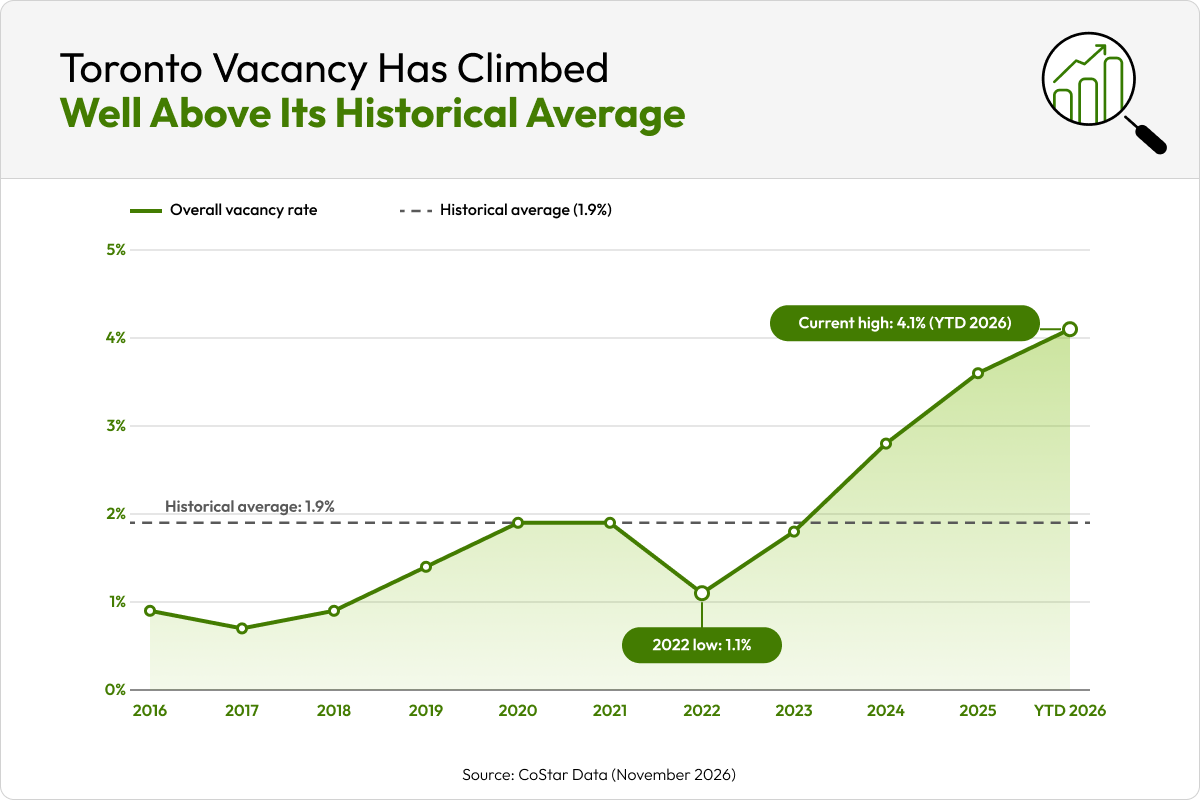
Toronto added 8,149 new apartments in the last year. Renters leased 5,845 units. While that is double the usual pace, it is still not enough to keep up with new buildings.
As a result, 4.1% of rental units in Toronto sit vacant. This is more than double the long-term average vacancy rate of 1.9%.
This new average hides a luxury-driven split, though. In new luxury communities, the vacancy rate reached 13.6%. Mid-range buildings saw a vacancy rate of 3%, and more affordable ones sit with 2.5% vacant units.
|
Average 1-Bedroom Rent |
Average Rent Change |
Vacancy Rate |
New Units, Past 12 Months |
Units Leased, Past 12 Months |
$1,973Per month
|
-1.2%Year-over-year |
4.1%Up 0.5 points from last year |
8,149More than double the average (3,619 units) |
5,845About double the average (2,846) |
What this means for renters
If a unit in a new construction has caught your eye, now is the time to shop.
"Renters are arguably in the strongest position they've been in for quite some time. We expect renter favourability conditions to continue in the coming quarters as the construction pipeline remains strong (healthy levels of new supply coming market), while population growth is set to slow, reducing aggregate demand."
- Mitch Strohminger, Director of Marketing Analytics, CoStar Group
Landlords are offering incentives for tenants because this space is about to get competitive. About 20,240 high-end units are currently under construction, which equals 39.5% of current luxury supply. On the other hand, if you're looking for a mid- or lower-range apartment community, you might have less choices and negotiating leverage.
Rent Sticker Prices Are Down
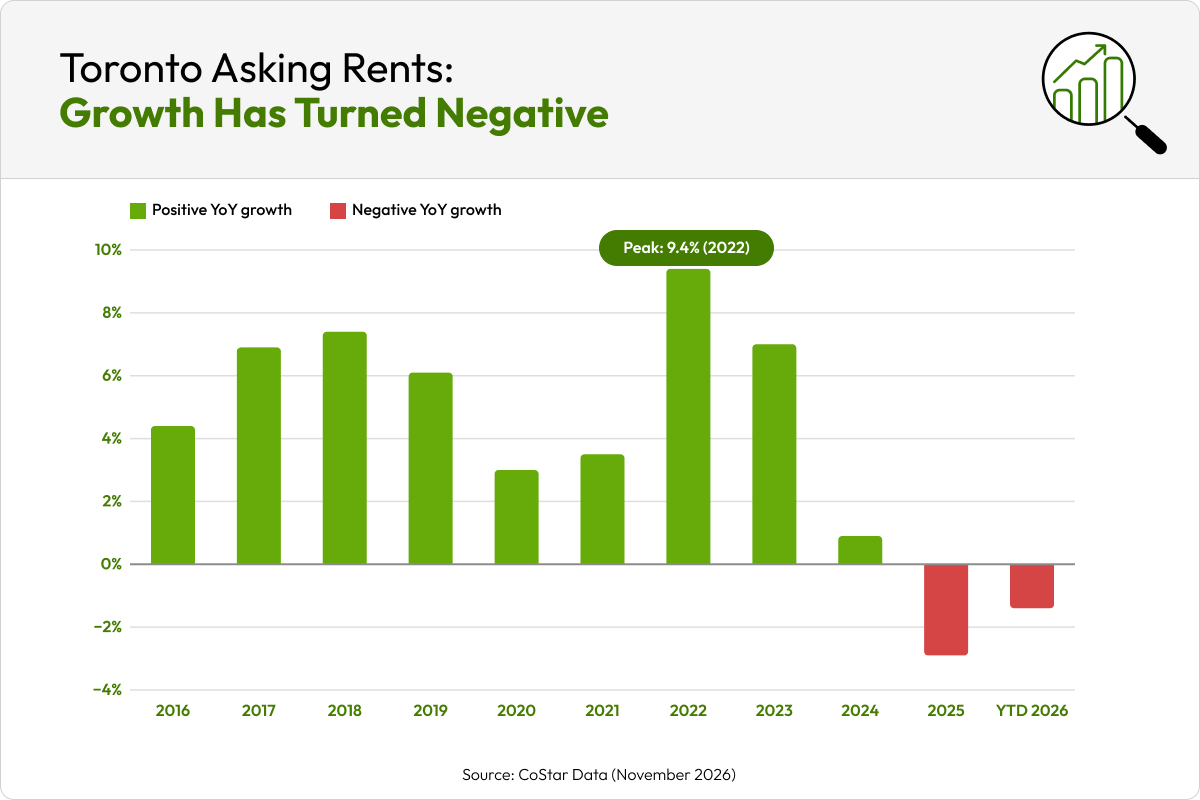
The current average rent in Toronto is $1,973 per month, down 1.2% from a year ago. The decline is modest, but it continues with a steady cooling after years of steep increases. Rent growth peaked in 2022, when rents climbed a staggering 9.4%. Rents still vary widely by neighbourhood, and these areas currently have the most rentals available:
|
Neighbourhood |
Average 1-Bedroom Rent |
Rental Availability |
|
$3,263/month |
960 units |
|
|
$2,464/month |
937 units |
|
|
$2,687/month |
769 units |
|
|
$2,207/month |
754 units |
The most affordable neighbourhood in Toronto right now is Clearlea-Birchmount, with an average rent of $1,770/month. Oakridge ($1,789/month) and Victoria Village ($1,789/month) follow closely in terms of affordability.
Renters Haven't Had This Much Choice in Toronto in Years
Toronto's vacancy rate has reached the highest level in over a decade. Even so, renters have serious budgetary considerations to make. Few new housing units are being built at the lower end of the market, which keeps older and more affordable inventory in shorter supply.
However, this luxury influx reflects renter moves. Luxury buildings have the most empty units, but they're also where most renters are moving. This year, high-end buildings leased 4,574 units. Older buildings have seen 345 more move-outs than move-ins. With empty units come incentives, and many tenants are using this momentum to upgrade.
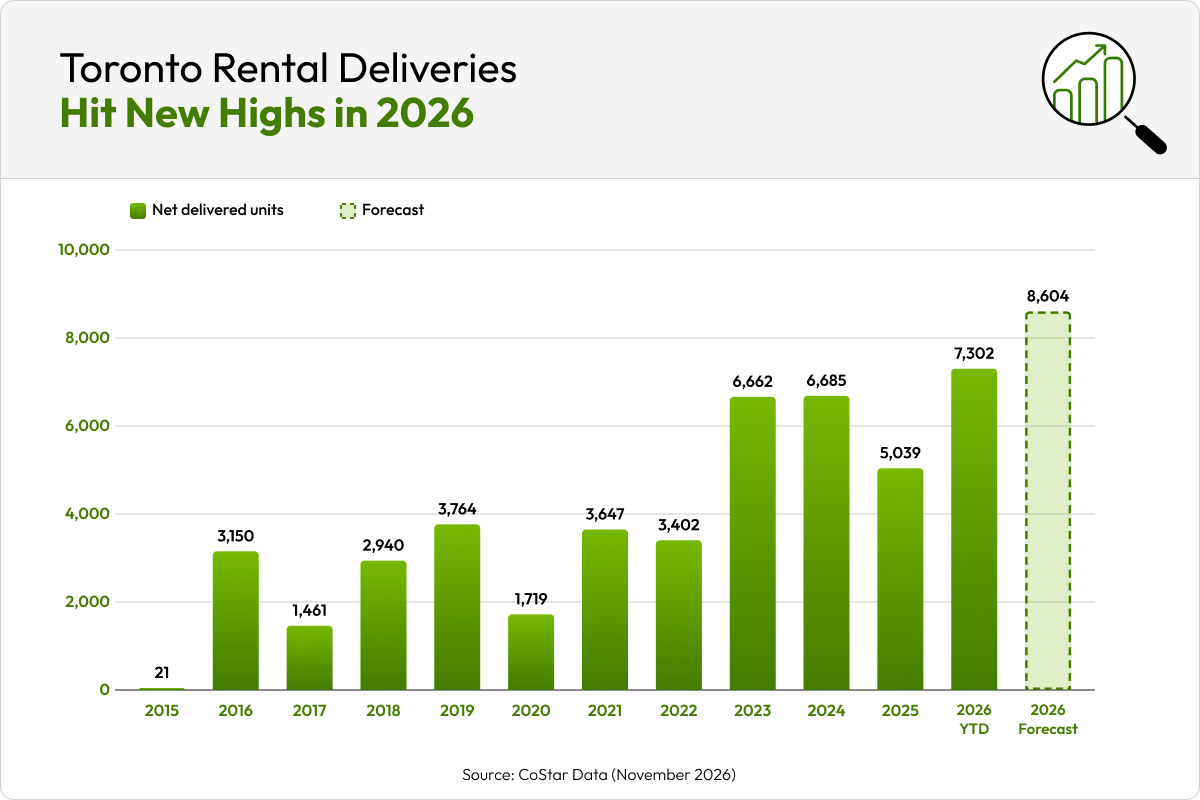
Most vacant units are concentrated among the 7,302 recently completed units. In established buildings, vacancy is under 3%. By unit size, one-bedrooms are the easiest to find, with a vacancy rate of almost 5%, while studio apartments are the tightest at only 3%.
More than 27,000 new apartments are on the way for Toronto renters
Toronto added 8,149 new units in the last 12 months, more than double the yearly average of 3,619. By the end of this year, 8,604 rental units are forecast to hit the market. And that's only part of the construction pipeline.
About 27,500 units are currently under construction across the metro area, enough to expand the region's rental supply by 6.6%. Nearly three-quarters of that pipeline is high-end: 20,240 units are in premium buildings, while another 7,257 are in mid-range communities. The most notable projects include The Rose Towers at 241 Queen St. E. (1,290 units) and Alta at 25 Borough Dr. in Scarborough (1,285 units).
Methodology
The rent data in this report is sourced from CoStar Group’s Market Trend reports. CoStar Group is the leading authority in commercial real estate information, analytics, and news, trusted by real estate professionals for nearly 40 years. By combining this data with Apartments.com internal data and public record, we’re able to deliver the most up-to-date rental information available.


