

Online leases have become the standard in renting, so many renters don’t think twice about signing one. While it is great to be able to secure your new home without having to step outside, you have to be just as vigilant as if you were signing in person. That means knowing the ins and outs of online lease agreements and what they entail.
Key Takeaways
- An online lease is a digital rental contract. It outlines the same terms as a paper lease but is signed and stored entirely online.
- Online leases are legally binding. Thanks to the ESIGN Act, an electronic signature carries the same legal weight as a signature on paper.
- Careful review still matters. Even though signing is digital, you should thoroughly read your lease and reach out with any questions before signing.
What Is an Online Lease?
Online lease agreements are digital contracts that spell out the terms of a rental arrangement between a landlord or property manager and a renter. Typically, online leases are signed and stored entirely online. Many apartment communities and renters prefer them as they allow for quicker and easier signing, simpler access for all parties, and lower risk of damage or loss.
Is an Online Lease Legally Binding?

Yes, an online lease is legally binding; it is just as official as if you went into the leasing office and signed in person. This is because of the Electronic Signatures in Global and National Commerce Act (ESIGN Act) of 2000, which states that “a signature, contract, or other record relating to such transaction may not be denied legal effect, validity, or enforceability solely because it is in electronic form.” In simpler terms, the law says that a signature is just as valid whether it is electronic or physical.
How Does Online Leasing Work on Apartments.com?
Signing an online lease on Apartments.com is simple since you’ll be notified when your landlord sends you one. Click the menu icon in the top left, select Renter Tools, then My Home, and choose Residences. From there, you can view and sign the lease, check its status (including whether roommates or your landlord still need to sign), and use the Other Actions menu to cancel it or request a change. This is also where you'll return anytime you need to view the lease again.
Signing a lease on Apartments.com is not just easier, but also safer. The signing process is secured and encrypted to keep your information safe. Every lease form is reviewed by experts to confirm it complies with the rental property's state laws, giving you an extra layer of protection and peace of mind.
What Are the Pros and Cons of Online Lease Agreements?

Most landlords and property managers have moved away from paper leases in favor of digital ones. In fact, online leases have become so common that many landlords no longer offer a paper alternative at all. The good news is that once you get the hang of it, most renters find the process is actually easier than the traditional way.
Pros of online leases
- Faster turnaround: Online leases cut out printing, manual filling, and physical distribution, so you can typically review and sign your lease much faster than with a paper process.
- Sign from anywhere: You can review and electronically sign your lease from your phone or computer, without needing to meet in person or mail documents back and forth.
- Easy access to your documents: Your lease is stored digitally and can be pulled up any time you need to reference your terms, rather than digging through paperwork at home.
- Clearer communication: Any updates or changes to your lease terms can be shared with you electronically, which helps reduce confusion or miscommunication between you and your landlord.
- Added security: Reputable platforms use encryption and authentication measures, such as two-factor authentication, to help protect your personal and financial information.
- More environmentally friendly: Signing online means less paper waste overall, which is a small but meaningful benefit if sustainability matters to you.
Cons of online leases
- Requires internet access and a device: You'll need a reliable internet connection and a computer or smartphone to review and sign your lease, which could be a barrier for some renters.
- Data privacy considerations: Because your personal information is stored digitally, it's worth confirming that your landlord or property manager uses a secure, reputable platform, like Apartments.com.
Electronic Signatures vs. Digital Signatures
Online leases become legally binding through the signatures provided by all parties. Since the lease is online, it only makes sense for the signatures to be digital or electronic as well. While these terms are often used interchangeably, there are a few key differences that you should be aware of.
What is an electronic signature?
An electronic signature, or e-signature, is the broader category that includes digital signatures. It works like a traditional ink signature, except it’s applied electronically, meaning there’s no need to physically sign or scan anything. This is a fast, easy way to sign documents online.
What is a digital signature?
A digital signature is a specific type of electronic signature that uses advanced technology to provide additional security. It works by using a math-based key system that adds extra security through encryption and verification, making sure the signature and document are protected and haven't been tampered with. This is often used in highly regulated or security-sensitive situations, so most renters will encounter standard electronic signatures rather than digital when signing an online lease.
What to Review Before You Sign Your Lease
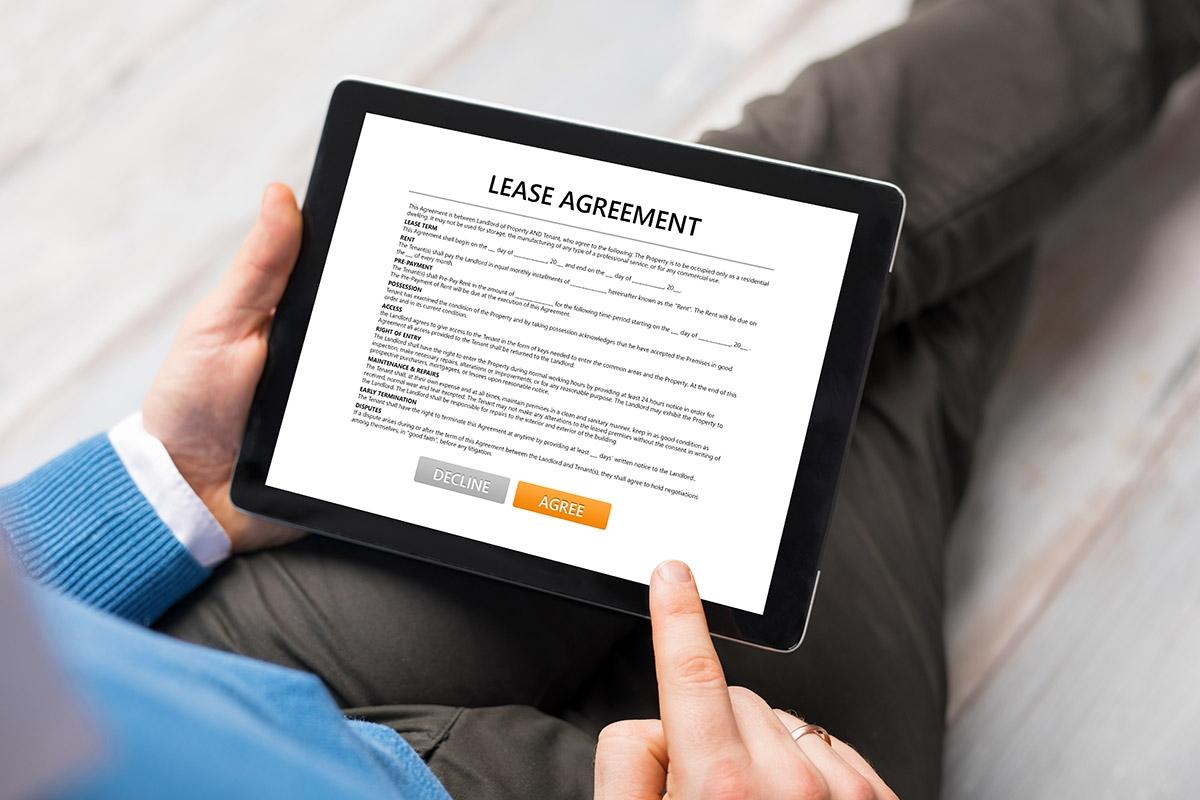
Start off on the right foot by thoroughly reviewing the lease. It may be a long document, but reading it allows you to know exactly what is expected of you as a renter and your rights. While you should always read the entire lease, keep an eye out for these main points:
- Rent: Confirm the rent price matches what you originally agreed to. Also read the payment terms carefully as this section will outline when rent is considered late and what late fees may apply.
- Security deposit: Verify the deposit amount matches what was agreed upon. Check the terms for how and when it will be returned, what conditions could lead to deductions, and whether it's refundable or non-refundable.
- Lease length: Check that the lease term and dates are correct. Review the lease terms around renewal, as well as your options for ending the lease and moving out. It's also worth reading up on what breaking your lease early would involve, in case your plans change.
- Community rules: Review all community rules to help ensure a smooth living experience. This typically covers things like parking, guest policies, noise restrictions, and other community expectations.
- Utilities: Your lease should specify which utilities are included in rent and which are entirely your responsibility, as well as any requirements, such as specific companies.
- Pets: If you have pets, double-check the pet policy in the lease. While this is usually discussed beforehand, reviewing it in writing helps you understand your responsibilities as a pet-owning renter, including any pet fees, deposits, or breed/weight restrictions.
- Alterations: Make sure any changes you negotiated with your landlord or property manager are actually reflected in the final lease.
- Prohibitions: Look for anything you're explicitly not allowed to do, such as subletting the apartment, running a business out of the unit, or making alterations without approval.
- Renters insurance requirements: Check whether renters insurance is required, and if so, note any minimum coverage amounts or specific requirements, such as listing your landlord as an additional interested party.
Can I Still Ask Questions Before I Sign?
Yes, if you have any questions, require clarification, or want to have a discussion about the lease, then reach out to your landlord or property manager. Leases can be time-sensitive, so if you send an email or text and don’t get a reply within the day, it might be best to call or visit the leasing office in person.
That time sensitivity doesn’t mean you should rush the online leasing process though; it just means you might not have the luxury of waiting days or weeks for the landlord to reply. You still need to read the lease carefully and make sure everything checks out before you sign.
What Happens to My Lease After I Sign?
What exactly happens to your lease after you sign depends on your apartment community, but many places store leases digitally. Often, you can go to the property’s website and review your lease agreement. On Apartments.com, go back to the “Residences” tab to find your lease. While your lease should always be accessible online, some renters prefer to be even more careful and save an extra on their computer or print one out to have a physical copy.
Stay Digital Through the Entire Apartment Hunt
Online leasing was one of the first ways the apartment hunt digitized, but it wasn’t the last. Now the entire process can be done entirely online: from the apartment tour to the actual signing of the lease. And Apartments.com is here to help you every step of the way.
From simplifying the search with Apartments.com Ai to immersive Matterport 3D tours, Apartments.com is continuously innovating and improving upon the online apartment hunt. Start your search today and experience the easiest way to find, tour, and lease your next apartment.
This article was originally published on April 15, 2020.
FAQs
Does an electronic signature hold up in court?
Yes, under the ESIGN Act of 2000, an electronic signature carries the same legal weight as a handwritten one and cannot be denied validity simply because it's in electronic form.
Are online rental agreements valid?
Since electronic signatures carry the same legal standing as physical ones, online rental agreements are just as binding and enforceable as those signed in person.


