

When Denver City Council voted in June 2022 to pass the Expanding Housing Affordability (EHA) ordinance, it set out to ensure that lower- and middle-income residents can afford housing. Four years later, the policy is still reshaping where and how housing gets built, and whether it helps or hurts renters is still disputed.
What Is the EHA Ordinance?
City Council approved the EHA ordinance on June 8, 2022, and it took effect on July 1, 2022. Here’s how it works:
- Residential buildings with 10 or more units: Developers must set aside a percentage of units at lower, income-restricted prices or pay a fee in-lieu ranging from $250,000 to $478,000.
- Residential buildings with fewer than 10 units and non-residential projects: Developers must pay increased linkage fees that fund affordable housing.
In census tracts with the highest land values compared to the citywide median, developers must allocate either 10% of units as affordable housing for renters making 60% of Denver’s median income or 15% of units as affordable for renters making 70% of the median income. Everywhere else, developers must allocate 8% of units as affordable housing for renters making 60% of the median income or 12% of units for renters making 70% of the median income. The affordable units must stay income-restricted for 99 years.
In other words, the more expensive the land is in an area, the more units developers must set aside as income restricted.
To incentivize builders to follow the EHA allocation requirements instead of paying the fee in-lieu, the city is offering flexible parking requirements, by-right height increases, and permit fee reductions.
| Market Area | Affordable Housing Allocation | Income Requirement |
|---|---|---|
| Typical Market Area | 8% | 60% of Denver median income |
| 12% | 70% of Denver median income | |
| High Market Area | 10% | 60% of Denver median income |
| 15% | 70% of Denver median income |
How are developers responding?
The first response was a rush to beat the deadline. Builders submitted a large number of projects, hoping for Site Development Plan (SDP) approval before the ordinance took hold, which delayed its practical enforcement by about three years. Projects that cleared the exemption deadlines stayed under the older, cheaper 2016 fee structure. The initial August 30, 2022, deadline for SDP approval was extended to April 18, 2025.
"Development is shifting toward suburban locations along the southeast corridor, including the Denver Tech Center, Littleton, and Douglas County."
Jeannie Tobin, Director of Market Analytics for Colorado, CoStar Group
Now that the deadline has passed, developers are setting their sights on neighboring cities, particularly Aurora. Construction costs here are lower, and the EHA regulations don’t apply.
Jeannie Tobin, CoStar Group’s director of market analytics for Colorado, says that in addition to Aurora, “development is shifting toward suburban locations along the southeast corridor, including the Denver Tech Center, Littleton, and Douglas County.”
The Bigger Picture: What’s Really Influencing the Shift?
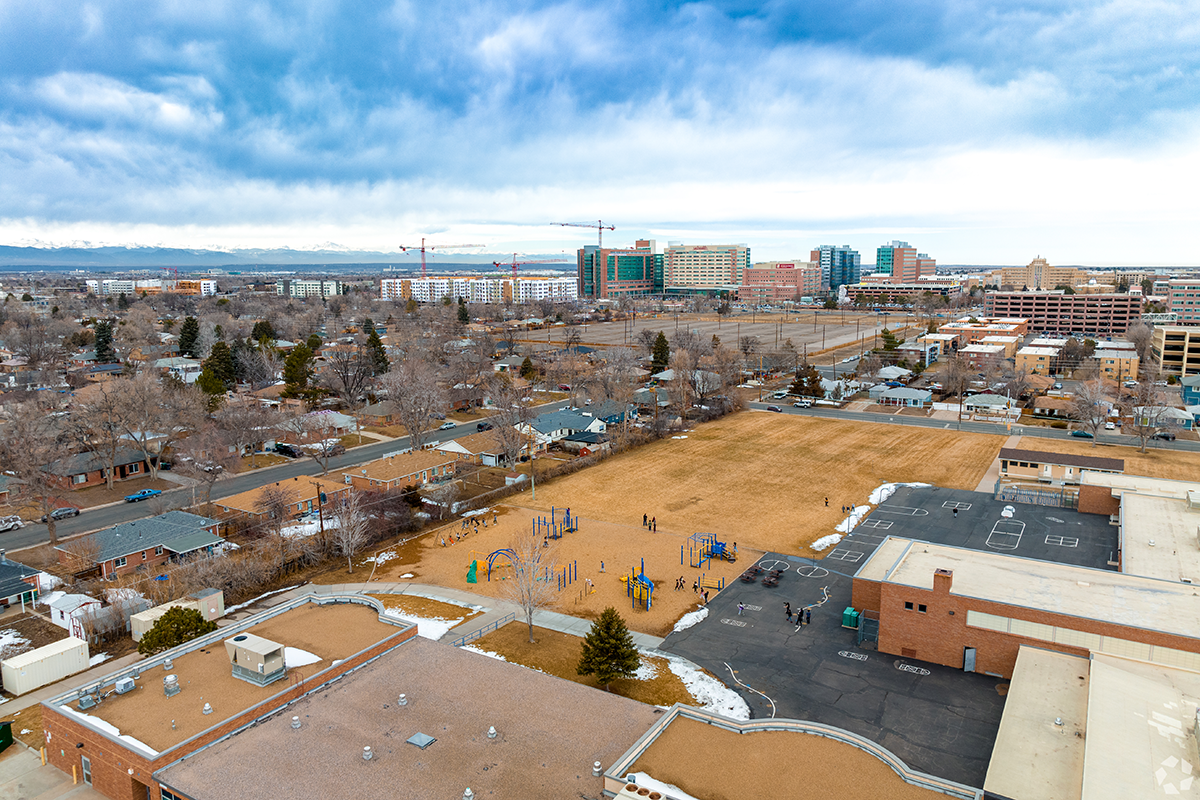
Tobin says that while the EHA ordinance plays a role in the shift of development to more suburban parts of the city, there are other factors.
With year-over-year rent changes across Denver in the negative for the past two years, developers have had to re-evaluate where they can maximize their profit margins. Much of Denver proper is already developed, so land is scarce and more expensive than in outlying areas.
“Suburban areas can offer lower land costs, larger parcels, different approval processes, and proximity to expanding employment and population centers in the Southeast Suburban areas,” says Tobin. “At the same time, higher interest rates, difficult equity markets, and soft rent growth have reduced the number of projects that work financially across the entire metro.”
In addition to higher start-up costs, operating costs are higher in Denver proper than in other parts of the metro area. CoStar Group reports that in 2025, total operating expenses per unit were 28% higher in Downtown Denver compared to the entire metro area, and net operating income was only 21% higher than that of the entire metro area.
In crunching the numbers, Colorado developers are seeing lower start-up and operating costs in the suburbs with comparable gross income, so the additional requirements and costs in the EHA ordinance are only adding fuel to an ongoing fire.
Renters are following the trend
Leasing activity in Downtown Denver is trending downward while the suburbs are seeing more demand. Aurora is on track to surpass Downtown Denver in lease-ups for the first time since 2012, and the Denver Tech Center has seen the most lease-ups this year since 2015.
Like developers, renters are attracted to the job opportunities these areas offer. The Anschutz Medical Campus is a major source of job growth in Aurora, and the Denver Tech Center remains one of the city’s main employment hubs.
In addition to the draw of more job opportunities, new properties in Aurora and the Denver Tech Center are offering deeper concessions as property managers seek to fill vacancies; the concession rates in Aurora and the Denver Tech Center for properties built since January 2023 are 13.2% and 19.1%, respectively. On average, the concession rates for properties built before 2023 are 6.9% and 7.1%.
What’s Next for Denver?
Tobin says that “the EHA ordinance seemed to put an initial freeze on new developments within Denver—permits plummeted in the year following the passage of EHA—but now the environment is normalizing as developers readjust to the new regulatory environment.”
After the rush to beat the EHA deadline, development cooled within Denver city limits. This temporary construction freeze may eventually lead to a halt in new supply that could allow time for renters to absorb oversupply and subsequently cause an increase in rents.
"The EHA ordinance seemed to put an initial freeze on new developments within Denver...but now the environment is normalizing as developers readjust to the new regulatory environment."
Jeannie Tobin, Director of Market Analytics, CoStar Group
In the meantime, developers are adjusting to the new EHA requirements. There are about 3,000 new units currently under construction in Downtown Denver, but construction is increasing in the suburbs as well. Rent growth remains subdued across the metro areas as the vacancy rate sits at 10% and the concession rate surpasses 9%.
“In the near term, renters may continue to encounter concessions and a relatively broad set of options as the remaining pipeline leases,” says Tobin. “Over time, the relationship between renter demand and the smaller supply pipeline will determine whether those conditions persist."


