

A college town seems like an alternate universe sometimes. Their populations swell and thin around an academic calendar, and a contagious buzz fills the air after a big win or a successful finals push. These university-driven rhythms also translate to benefits that renters can easily track.
The college town cycle creates something that renters usually lack in big cities: predictable leverage thanks to the demand around the school year. Thousands of leases turn over within a window. That means that landlords will fight hard for the tenants that will stick around for longer than a semester or two.
Whether you're a recent grad hunting for a familiar pace or someone who can't remember the last time you could survive on dining hall coffee and optimism, a college town might be the move you haven't considered yet. Here's what the data says about where deals are, how much you can save, and the top college towns to consider.
The Top College Towns for Renters
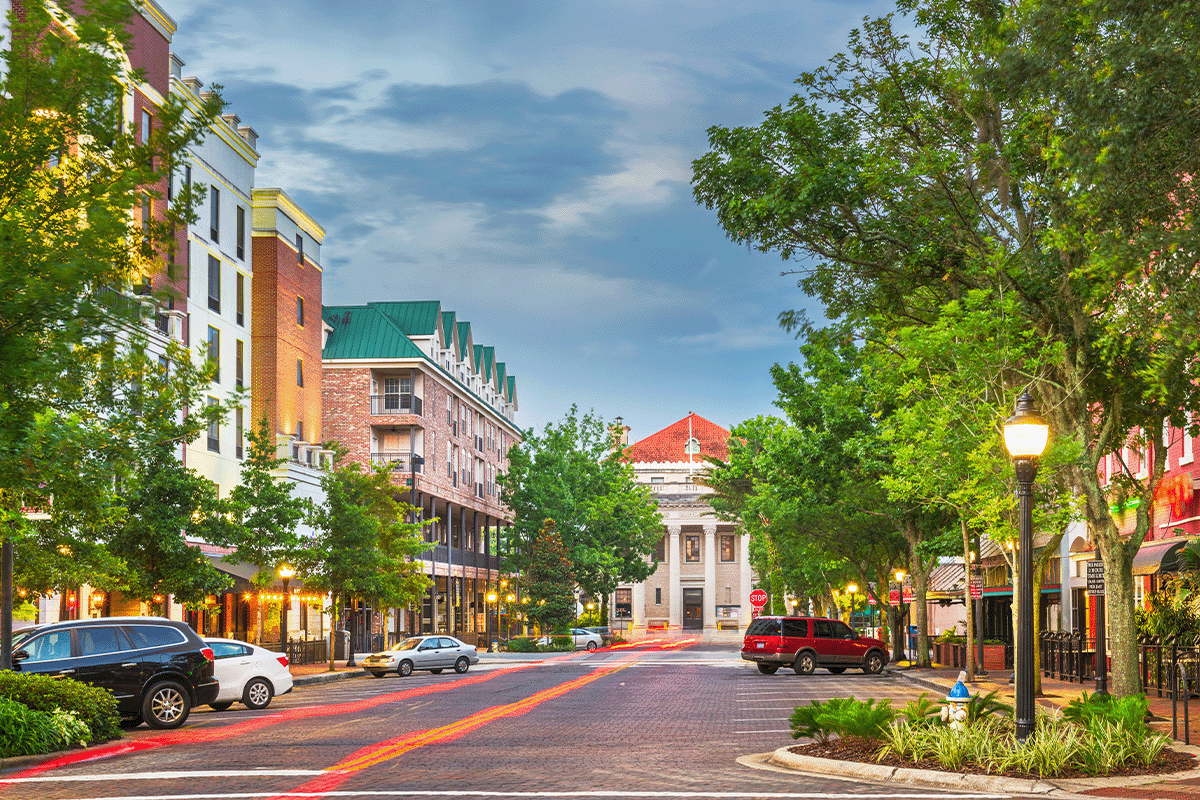
All college towns have collegiate-fueled charm. However, not all of them are cut from the same cloth. From the middle-of-nowhere stars to the suburbs that can rival metro rent prices, not all college towns offer the best value. For this article, the data had to strike a balance between the places where a university footprint was large enough to affect housing, and where that influence works in a renter's favor.
But how does one define a "college town?" No need to enroll in Quantitative Reasoning 101 for this equation:
-
We took the university's full-time enrollment and divided it by the city's population. When that figure hits 20% or higher, the school isn't just in the town; it is the town.
-
Enrollment data is from the Department of Education's Integrated Postsecondary Education Data System (IPEDS). Official college enrollment data and population is from the U.S. Census Bureau's most recent estimates.
-
We filtered for cities under 500,000 residents (sorry, Los Angeles, having UCLA doesn’t make you a college town). However, smaller towns had to have enough rental inventory for a stable average.
The Best College Towns for Renter Value
Ranked by overall renter value — combining affordability relative to the national average, concession availability, and market leverage — here are the best college towns for renters in 2026.
City, State |
University |
Average Monthly 1BR Rent |
Concession Rate (Q3 2026) |
What Renters Gain |
|
Athens, GA |
University of Georgia |
$1,180 |
6.69% |
Highest discount rates for any college town studied. |
|
Knoxville, TN |
University of Tennessee |
$1,363 |
4.56% |
Large market with rising concessions gives renters strong negotiating position. |
|
Gainesville, FL |
University of Florida |
$1,267 |
3.73% |
Nearly twice the national concession rate with properties competing for renter attention. |
|
College Station, TX |
Texas A&M University |
$1,098 |
3.12% |
The concession rate nearly doubled in a year. Newer supply work in the renter’s favor. |
|
Stillwater, OK |
Oklahoma State University |
$854
|
3.01% |
Concession rates doubled year-over-year, stacked with Oklahoma’s low rent prices. Oklahoma is ranked first in least expensive rent by state. |
|
Oxford, MS |
University of Mississippi |
$1,326 |
2.97% |
Oxford experienced the biggest year-over-year concession jump among the cities studied. |
|
Tuscaloosa, AL |
University of Alabama |
$992 |
2.77% |
Alabama rents already fall among the cheapest nationwide, so concession rates give renters flexibility. |
|
Ames, IA |
Iowa State University |
$875 |
2.53% |
Meaningful discounts in fall 2026 come after a year of few concessions. |
|
Norman, OK |
University of Oklahoma |
$948 |
2.28% |
Although concessions have slowed down since last year, the concession rate remains stable. |
|
Lubbock, TX |
Texas Tech University |
$862 |
1.84% |
The concession rate may be below the national average, but renters should not overlook the low rent prices. |
Note: The national concession rate benchmark is currently 3.7% according to Apartments.com’s RentPulse Index.
Breaking down the best college towns for renters
Nine of the 10 college towns considered for this index have concession rates at or above 2.0%. The average across them sits at 2.5%.
In eight of these markets, concessions are rising year-over-year. Oxford, Mississippi, saw its concession rate jump by 2.1 percentage points in a single year. Ames, Iowa, went from a rate of 0.7% to 2.5%. Stillwater, Oklahoma, more than doubled.
Combining rising concessions with lower rent prices results in greater financial advantages for renters. For example, a 6.7% concession on a $1,180 apartment in Athens means a renter is effectively paying about $1,101. This is a combined $564 per month less than the national average, or nearly $6,800 per year.
What Does Rent Cost in a College Town?
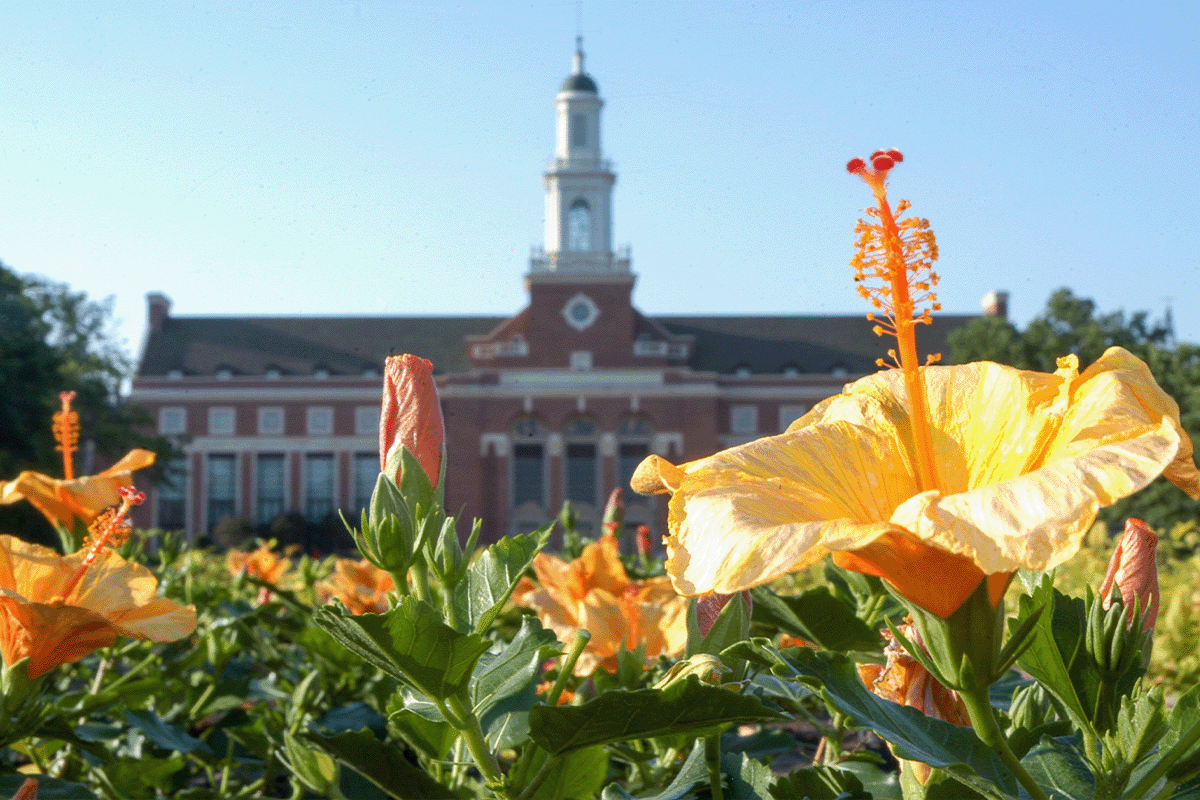
The national average rent is $1,667 a month. College-town renters can often pay far less.
Across the college towns in our analysis, average one-bedroom rents range from $854 to $1,363 monthly, with most falling below the national figure. Here are the most affordable college towns for one-bedroom apartments, ranked by how far their average rents fall below the national average:
-
Stillwater, OK: $854/month | 49% lower
-
Ames, IA: $875/month | 48% lower
-
Lubbock, TX: $862/month | 48% lower
-
Norman, OK: $948/month | 43% lower
-
Tuscaloosa, AL: $992/month | 40% lower
Those savings go further when renters factor in that these college towns also have lower costs for groceries, transportation, and healthcare. Even in Tuscaloosa, the most expensive city on this affordable list, the overall cost of living is 11.5% below the national average. Housing costs 26.5% less, groceries cost 3.3% less, and transportation costs 10.8% less.
5 Reasons to Choose a College Town, Even if You’re Not a Student

College towns aren't just for students pulling all-nighters. Here's why they're increasingly attracting renters of all ages.
1. The Cost of Living Is Lower
College towns are built around a population that doesn't have a lot of disposable income. Many college towns have lower costs for groceries, transportation, and healthcare. Even in Tuscaloosa, the most expensive city on our affordable college towns list, the overall cost of living is 11.5% below the national average. Housing costs 26.5% less, groceries cost 3.3% less, and transportation costs 10.8% less.
2. Walkability and Infrastructure
Most universities have beautiful campuses. That beauty spills into the surrounding town. The result is that a city of 50,000 people often has the walkability, bike infrastructure, and amenities of a larger city. Gainesville, Florida, has protected bike lanes and a regional transit system anchored by the University of Florida campus.
3. The Cultural Calendar Rivals a Big City
Major universities bring a constant stream of concerts, lectures, art exhibitions, Division I athletics, and cultural festivals. A college town of 60,000 people might host a nationally touring band, a Nobel laureate lecture, and a football game in the same weekend.
4. The Job Market Is Resilient
Universities are anchor employers that don't relocate or downsize the way private companies can. And they employ a wide range of people thanks to its many branches: the university hospital, research labs, faculty, and administrative offices. That stability creates an excellent floor under the local economy.
5. The Rental Market Gives You Leverage
College towns provide a seasonal and predictable turnover cycle as a structural advantage. There are specific windows every year where landlords have empty units and strong motivation to fill them. That leverage translates directly into concessions.
The Best Time of Year to Move to a College Town

Peak Season: May Through August
Timing is everything in a college town rental market. Summer is when demand and prices are highest. Students are signing leases for the fall semester, parents are co-signing, and landlords know they can fill units without offering discounts. If you move during this window, expect fewer concessions and peak competition.
The Sweet Spot: October Through February
Once the fall semester is underway, the frenzy dies down. Landlords with unfilled units start to feel the pressure of carrying a vacancy through the academic year. This is when concessions appear, rents soften, and you have the most negotiating power. A December or January move-in is especially favorable. Few people want to relocate during the holidays, which means even less competition.
The Spring Window: March Through April
There's a brief secondary window in early spring. Some students who transferred, dropped out, or decided to study abroad are breaking leases, creating mid-year openings. Landlords would rather offer a deal than leave a unit empty for the summer, so this can be another good time to find incentives.
Popular Rent Concessions That Renters Should Keep an Eye On

Concessions are a defining feature of today's rental market. Nationally, approximately 41.2% of multifamily properties offer rent concessions, a 9.9 percentage-point increase over the prior year, according to the Apartments.com RentPulse Index.
In a recent Apartments.com survey of nearly 27,000 renters, 88% said a discount or incentive would make them more likely to consider a property. The most popular concessions in this survey also mentioned other financial perks:
-
A free month's rent (69% of renters)
-
Discounted rent spread over 12 months (66% of renters)
-
Waived application or administrative fees
-
Reduced or waived security deposits
-
Free parking
Find a Place Where Campus Life Meets Real Life

College towns offer renters something increasingly rare in today's market: genuine affordability paired with real quality of life.
Ready to find your college town? Search apartments in college towns on Apartments.com and filter by your budget, preferred amenities, and move-in date to see what's available — specials and all.
Methodology
To identify the top college towns for renters, Apartments.com calculated the ratio of each university's full-time enrollment (source: NCES IPEDS, Fall 2024) to its host city's population (source: U.S. Census Bureau, Vintage 2025 Population Estimates). Cities were included where the student population-to-resident ratio exceeded 20%, overall population was under 500,000, and sufficient rental inventory existed for a stable average.
Towns were ranked by concession rate, the difference between asking rent and the effective rent paid, as calculated by CoStar Analytics for Q3 2026 across 2,899 tracked properties in 10 markets. Rent data comes from CoStar Group’s Market Trend reports via Apartments.com, and renter preference data comes from the Apartments.com Q2 2026 Renter Survey.
FAQs
What is a college town?
A college town is a city or town where a major university plays a central role in shaping the local economy, culture, and housing market. For this article, we defined it as a place where the university’s full-time enrollment makes up at least 20% of the city’s total population — meaning the school isn’t just located there, it drives the character of the community.
Are college towns cheaper to live in than big cities?
In some cases, it is cheaper to live in a college town than a metro area. Many of the college towns in our analysis have average rents 30% to nearly 50% below the national average of $1,665 per month. And those savings tend to extend beyond rent to groceries, dining, and transportation, since the local economy is built around a population that skews younger and more budget-conscious.
Can I get rent concessions in a college town?
Rent concessions are common across the U.S., and college towns are no exception. Nine of the 10 college towns we studied had competitive concession rates. In Athens, Georgia, for example, renters are paying 6.7% less than listed rent.
What is the best time to move to a college town?
October through February is the best time to move into a college town if you are a non-student. Once the fall semester starts and the rush of student lease signings is over, landlords with unfilled units are more willing to negotiate. December and January tend to offer the least competition. There’s also a brief secondary window in March and April, when mid-year lease breaks from students who transferred or left school create unexpected openings.
Do I have to be a student to rent in a college town?
College town apartments are open to anyone, and many non-students choose these markets specifically for their affordability, walkability, cultural amenities, and public transit.
What should I look for when apartment hunting in a college town?
Pay attention to lease timing (many default to an academic-year schedule ending in July or August), proximity to campus (closer means more foot traffic and noise but also better walkability), and whether the property caters primarily to students or a mixed tenant base. On Apartments.com, filter by your move-in date and look for the “Specials” tag to find active concessions.
Why are concessions rising in some college towns?
In many markets, new apartment construction has outpaced student demand. This gives renters more options and bargaining power.


